SBM-3 – Material impacts, risks and opportunities and their interaction with strategy and business model

Material impacts, risks and opportunities related to Enea Group’s operations have been determined based on the double materiality analysis, including a detailed analysis of climate-related risks and opportunities In accordance with the ESRS standard, this assessment included an impact materiality analysis and a financial materiality analysis.

All material impacts identified by the Enea Group are a result of the Group’s business model, and a significant majority of them is also closely linked to the Enea Group Development Strategy. Detailed information on the links to the business model, effects on people and the environment and the time horizon of the impacts is presented in the tables entitled Material impacts/risks/opportunities identified by the Enea Group.

The Enea Group Development Strategy, adopted in 2024, analyzes current and future challenges, risks and opportunities in terms of climate protection and energy security. The Group’s strategy was developed account being taken of the evolving environment and the need to transform energy sources towards low- and zero-emission technologies. The strategic objectives it sets out are strongly linked to the identified material impacts, risks and opportunities and respond to challenges related to the sector’s broadly defined energy transition. A change of the business model, an increase in the share of renewable energy sources and the construction of a gas-fired power plant enable the Group to change the scope of its impacts and reduce the negative impact on the environment and on employees. By expanding and modernizing the distribution grid, we create the conditions for increasing the share of RES in the energy mix and improving safety and reliability of supply. On the other hand, the mitigation of ESG risks should help limit adverse financial or reputational effects. This approach allows the Group to improve the resilience of its strategy and business model to the possible future scenarios.

In 2025, the Enea Group developed and deployed the Sustainability Strategy based on previously identified material impacts, risks and opportunities. The strategy complements and details the Enea Group Development Strategy, in a way that directly translates ESG aspects to building the Group’s resilience.


The ESG Strategy will not only mitigate negative impacts and risks, but also increase positive impacts and opportunities related to sustainability.

The Enea Group estimates that capital expenditures related to the implementation of the Strategy for the period 2024-2035 will amount to approximately PLN 107.5 billion.

The Group assumes that PLN 67.1 billion will be invested using its own funds while the remaining PLN 40.4 billion will be financed through strategic joint venture partnerships, under the project finance model or using other off-balance sheet forms. This will enable the Group to grow and develop while remaining financially stable.

Intended capital expenditures by area:

    36.2
    PLN billion
    Investments in renewable energy sources
    2.3
    PLN billion
    Investments in energy storage facilities
    40.9
    PLN billion
    Distribution
    1.1
    PLN billion
    Heating
    1.5
    PLN billion
    Other activities of the Enea Group

During the reporting period, the Enea Group did not conduct a formal resilience assessment of its Development Strategy. However, in the course of developing the ESG Strategy, the Group considered the impact of individual material matters on its resilience to risks and adverse impacts, as well as the effect of using material opportunities. The objectives were selected in such a way as to strengthen the resilience of the ESG Strategy itself and, by extension, the Enea Group’s business model. The analysis of adverse impacts and risks conducted supports the conclusion that the Development Strategy, the ESG Strategy, and the Enea Group’s business model were all resilient to such occurrences as at the end of 2025.

Risks assessed at the highest rating (4), with a short-term likelihood of occurrence (within 1 year) and potential to materialize in 2026, are as follows:

  • risk of a change in demand for services in the area of electricity (Enea Group),
  • risk of pushing out high-emission units out of the merit order curve (Generation, Trading),
  • risk of devaluation/depreciation of assets (Generation),
  • regulatory and market risks associated with limited availability or unavailability of (wood, agricultural) biomass, resulting in failure to meet emission parameters and loss of revenue from the capacity market (Generation),
  • risk of conflicts with NGOs due to the use of biomass (Generation),
  • reputational risk associated with employees’ negative response to changes in the workforce resulting from the energy transition – social protests (Enea Group),
  • risk of losing reputation, court action and fines for violating collective interests of consumers (Enea Group),
  • risk of necessity to pay out compensation in accordance with UOKiK’s decisions issued in proceedings concerning guaranteed price contracts (Enea Group),
  • risk of increasing corruption incidents due to a low level of anti-corruption knowledge among employees (Enea Group).

For some of these risks, an adjustments of the asset value may be required in the subsequent reporting period, for example, due to the need to recognize or increase legal provisions arising from administrative penalties or litigation costs.

Following the update of the double materiality assessment process in 2025, a decision was made in several instances, on substantive grounds, to consolidate two impacts into one. No impacts were removed. The ratings assigned to certain impacts were revised, reflecting actions implemented by the Enea Group during 2025. Impacts under standard S2 were reassessed, as the prior year’s analysis had not subjected them to a sufficiently granular evaluation. These changes are captured in Table SBM-3. Risks and opportunities were assessed in accordance with the assumptions set out in the Enea Group’s Methodology for Managing ESG Risks and Opportunities.

Material impacts, risks and opportunities and their interaction with strategy and business model are presented in Section E1.

Material impacts, risks and opportunities and their interaction with strategy and business model are presented in Section E4.

Significant locations of the Enea Group that may affect biodiversity and ecosystems are presented below.

The Company conducts its activities in the vicinity of protected areas, including the Uściwierskie Lakes and Polesie Natura 2000 sites, the Łęczyńskie Lakeland Landscape Park, the Polesie Protected Landscape Area, and the Chełm Protected Landscape Area. These areas are mostly terrestrial and freshwater ecosystems that require protection of habitats, species and landscapes. The company’s operations do not directly affect the unique surroundings, and most of the mining damage resulting from the formation of subsidence basins affects agricultural land. These, in turn, are monitored on an ongoing basis and then reclaimed.

The company conducts manufacturing activities in protected areas, including the Drawa National Park, the Koronowo Lagoon Protected Landscape Area, Wdecki Landscape Park, Natura 2000 Area of the Rega River Basin and Ostoja Pilska and the Protected Landscape Area of the Wałcz Lake District and the Gwda Valley. These areas were created thanks to the lakes formed as a result of damming for energy purposes. Enea Nowa Energia invests in improving fish passage conditions through the construction and upgrading of fish passes at selected power plants. The Water Management Plans, as a supplementary measure to achieve the environmental objectives set for specific rivers, have restored morphological continuity (mainly for diadromous fish), which has been interrupted as a result of damming the water at the weirs.

In the Kozienice municipality, the company is neighboring a Natura 2000 area and is located in an area of significant importance for biodiversity. The power plant has maintained environmental monitoring on its land and in the surrounding area for many years; for the past several years, no adverse impact of the plant’s operations on those areas, including the Natura 2000 site, has been identified. The company has been cooperating with the Stanisław Sakowicz Institute of Inland Fisheries – National Research Institute in Olsztyn, which conducts regular research on the impact of the plant’s power unit’s cooling system on the ichthyofauna of the Vistula. The results of the research do not provide clear evidence that the water withdrawal for cooling purposes at the Kozienice Power Plant poses a direct threat to any protected fish species.

Overhead power lines operated by the company cover approx. ¼ of the area of Poland (Wielkopolskie, Zachodniopomorskie, Kujawsko-Pomorskie, Lubuskie voivodships and a small part of Dolnośląskie and Pomorskie voivodships). They run through certain nature conservation areas, such as national parks (Drawieński National Park with its buffer zone, Bory Tucholskie National Park with its buffer zone, Wielkopolski National Park with its buffer zone, Drawieński National Park, Woliński National Park with its buffer zone and the buffer zone of the Ujście Warty National Park), landscape parks, nature reserves, Natura 2000 areas and protected landscape areas. These areas require special protection for wild birds and other animals and rare plant species.

Through its double materiality assessment, the Enea Group identified a material adverse impact, namely destabilization and degradation of the ecosystem arising from hard coal mining operations. This activity affects stability of land surface and causes damage to ecosystems. Two further impacts relating to protected species were also identified: adverse effect of open cooling systems on aquatic ecosystems, and bird mortality caused by power lines. No material risks or opportunities were identified in this area.

Through its double materiality assessment, the Enea Group identified a material adverse impact associated with the use of open cooling systems at the Kozienice and Połaniec Power Plants. This constitutes an impact of own operations on endangered species.

ESRS 2 SBM-3 S1 – Material impacts, risks and opportunities and their interaction with strategy and business model

All employees of the Enea Group are covered by the scope of this disclosure within ESRS S1. The Group distinguishes between operational and administrative workers and, in the case of non-employee workers, for example as individuals engaged under civil law contracts and individuals providing work through external companies. Impacts related to working conditions and impacts and risks related to occupational health and safety arise from the Enea Group’s business model, which is based on the generation and distribution of energy.

Negative impacts associated with workplace accidents occur incidentally, while issues related to future workforce changes, management diversity, or collective bargaining agreements are universal and typical for the entire energy sector. A potential negative impact has been identified in relation to workforce changes driven by the Group’s energy transition, which is embedded in its strategy and business model. As a result of the energy transition process, shifts in employment will occur, particularly within subsidiaries involved in mining and generation.

These changes will be gradual and caused for the most part by natural workforce processes, including the age structure at Enea Wytwarzanie, Enea Elektrownia Połaniec, and LW Bogdanka, where a portion of the workforce will reach retirement age in the coming years or become eligible for the “energy leave” (receiving severance pay or early retirement benefits). After the transition to a new business model, the number of jobs will decrease. At the same time, the HR policies, labor standards, and extensive training programs in effect in the Group foster a safe and supportive work environment. The Group demonstrates a commitment to employee development, equal treatment, and supporting them during the change process. Identified risks are associated with potential social reactions to the ongoing energy transition.

On the other hand, occupational health and safety (OHS) risks are incidental and relate to individual events, which is supported by a high OHS culture and well-established safety standards within the organization. The Group actively mitigates these risks by implementing the measures described in the Enea Group Development Strategy to 2035, the Sustainability Strategy, and the HR Strategy. In the long term, these actions are aimed at developing employee competencies, strengthening their position on the labor market, further enhancing safety standards, and ensuring a just transition.

The Enea Group operates exclusively in Poland and identifies no risk of forced or child labor. Furthermore, results from surveys, the double materiality analysis and whistleblower systems do not indicate any groups of employees particularly vulnerable to any form of harm.

Material impacts on workers in the value chain identified in the double materiality analysis process are based on the Enea Group’s business model, which relies, among other things, on their work in manufacturing products and supplying services. The analysis took into account the business model, which focuses on sourcing raw materials and equipment used for the generation and distribution of energy.

Workers in the value chain include individuals working at the Group’s locations but who are not part of its own workforce, such as employees of external companies performing activities on the premises of Group entities; they are exposed to incidental negative impacts associated with workplace accidents.  A second group consists of workers of entities higher up the Enea Group’s value chain, such as suppliers, manufacturers and contractors, who, due to the potential negative impact arising from the absence of audits among suppliers, may be exposed to human rights violations. The analysis utilized statistics on accidents involving workers in the value chain, obtained by the Group from contractors, as well as reports on the global state of respect for human rights and information on the locations where power engineering machinery and equipment is produced.

The Group is preparing to draw up sustainability criteria for suppliers, including criteria relating to respect for human rights. The positive impact associated with requirements imposed on suppliers under the Enea Group Code of Conduct for Contractors was assessed as non‑material compared with the previous year. No material risks or opportunities were identified in this area during the update of the process.

In the double materiality analysis, impacts related to communities residing or working near the Enea Group’s operating sites were identified as material. As the Group defined the impacts, risks, and opportunities related to affected communities, it relied on community engagement processes (including social consultations for investment projects, mechanisms to report grievances, cooperation with local governments) and the results of environmental impact assessments. All material impacts are a result of the Group’s business model. Two negative impacts resulting from the Group’s operations were identified: the impact of mining, generation, and distribution activities on water and sanitation for local communities, and the impact of these activities on land. These impacts are actual, universal impacts.

Positive impacts on local communities stem from social and charitable activities, the Group’s commitment to a just transition for regions, and the current socio-economic scale of its operations, which fosters local entrepreneurship in the areas where the Enea Group operates. These factors are reflected in the ESG Strategy as specific objectives for implementing community engagement standards and the development of local social programs. No significant risks or opportunities related to the affected communities have been identified.

The impacts identified in the Double Materiality Analysis, on consumers and end users, that is on persons and entities receiving or collecting electricity, are a result of the business model adopted by the parent company or subsidiaries.

The extent of disclosure includes all consumers and end-users on whom the Group exerts a material impact. In the double materiality analysis, based on legal requirements, industry best practice and customer feedback, two groups of customers with specific characteristics were identified: persons with disabilities who may have difficulties in accessing information, and vulnerable customers, i.e. individuals exposed to energy poverty. The Enea Group does not offer consumers any products that:

  • are by their nature harmful to humans, increase the risk of chronic diseases, or affect their health,
  • may result in a potentially negative impact on their right to privacy, freedom of expression or non-discrimination,
  • require accurate information to prevent any potentially harmful use.

All identified impacts are directly linked to the Enea Groups business model, specifically the sale and distribution of electricity and related customer service operations. The commitment to providing customers with the highest quality of service affects the Group’s strategy. Impacts related to personal data protection and the enhancement of customer service quality are integrated into strategic objectives aimed at achieving higher levels of customer satisfaction and the implementation of robust security standards.

The impacts exerted by Enea Operator, due to the specific nature of its business, focuses on the reliability of energy supply, network upgrades, enabling the development of renewable energy sources and the safe use of energy. These impacts are directly related to the Enea Group Development Strategy to 2035 and determine its provisions through statutory obligations in terms of energy security and energy supply. The Strategy establishes the following strategic development directions for distribution: ensuring continuous supply of electricity with appropriate quality parameters, and adaptation of the distribution network to operate in a decentralized power system. Negative impacts identified in this area are incidental and relate to personal data protection breaches and compliance with the competition law. These do not affect a specific customer group.

Positive impacts stem from the activities conducted by the Enea Group in developing and modernizing the distribution network and improving customer service quality (e.g., improving access to information and support). These affect all the Group’s customers. Risks and opportunities identified during the double materiality assessment are linked to these impacts and the Enea Group’s business model; they include, among other things, regulatory risks as well as risks and opportunities arising from the energy transition.

The implementation of the Development Strategy will enable the mitigation of risks and the materialization of opportunities for the Enea Group. The identified risks and opportunities pertain to all customers and are detailed in the tables below.

The descriptions of material impacts, risks, and opportunities (IROs) presented below may include references to 2024 data. This is due to the fact that the Group conducted the update of its double materiality analysis during the course of 2025. Information regarding the scope, timing, and updates of this analysis is detailed in disclosure IRO-1.

The implementation of the Development Strategy will enable the mitigation of risks and the materialization of opportunities for the Enea Group. The identified risks and opportunities pertain to all customers and are detailed in the tables below.

The descriptions of material impacts, risks, and opportunities (IROs) presented below may include references to 2024 data. This is due to the fact that the Group conducted the update of its double materiality analysis during the course of 2025. Information regarding the scope, timing, and updates of this analysis is detailed in disclosure IRO-1.

Subtopic Material topic Type of impact Name and description of impacts Place of impact origin Time horizon Area
ESRS E1 Climate change
Climate change adaptation Climate change adaptation Strengthening the security and reliability of energy supplies – as part of its impact, Enea Group carries out a number of activities aimed at strengthening the security and reliability of energy supplies in response to climate change. Enea Group
Climate change mitigation RES and new business lines Limited actions in the area of climate change mitigation – Enea Group implements to a limited extent the significant actions specified in SPA2020; about 9-11% of the energy produced came from renewable sources in 2024. Enea Group
Climate change mitigation RES and new business lines Development of RES sources and new business lines – The Group is in the process of developing energy from renewable sources, investing and planning a number of new investments in this area. It also conducts activities indirectly related to RES. Generation
Climate change mitigation Emissions Coal asset transformation – Long-term ambition of Enea Group is to achieve climate neutrality. To achieve this, Enea Group is working on a transformation plan for coal assets that are part of the Group’s portfolio. Generation
Climate change mitigation Emissions Greenhouse gas emissions – Enea Group deals with coal mining, electricity and heat production, energy distribution (using e.g. SF6), and energy trading. Group emissions in 2024 amounted to over 32 million t CO2, and emission intensity was over 0.97 tCO2/thousand PLN. Enea Group
Energy Energy Energy consumption – Due to the size of the Group, energy consumption is one of the most important environmental aspects, also translating into costs of operation and energy production. Enea Group
Energy Energy Increasing energy efficiency – Improving efficiency by reducing or not increasing the consumption of fuels and energy – is one of the most important provisions of the Enea Group Climate Policy. Enea Group
ESRS E2 Pollution
Air pollution Air pollution Dust emission in production facilities and mine – During coal combustion, dust is created, which in addition to soot also contains heavy metals. Generation and Mining
Air pollution Air pollution Emission of sulfur oxides, nitrogen oxides, and organic compounds in production facilities – As a result of coal combustion, sulfur oxides, nitrogen, and organic compounds are created. Production companies take action to limit these emissions, however, they are not able to prevent them completely. Generation
Air pollution Air pollution Environmental pollution resulting from coal transport – In 2024, Enea Group purchased about 8.4 million tons of coal. It was transported mainly by rail wagons.
Generation
Water pollution River pollution Pollution of rivers by power plants – Several types of wastewater are created in conventional power plants. This wastewater is polluted, among others, by nitrogen, phosphorus, arsenic, copper, mercury, nickel, lead, zinc, dioxins, benzene, phenols, hydrocarbons, chlorides, and cyanides. Generation
Substances of very high concern Substances of very high concern Emission of substances of very high concern – Enea Group emits substances such as polycyclic aromatic hydrocarbons (PAH) as well as dioxins and furans, which are created as a result of fossil fuel combustion. These compounds can increase the risk of cancer. These substances can negatively affect the health of plants and animals, leading to ecosystem imbalance. Generation
ESRS E3 Water and marine resources
Water Water use Water consumption – in Enea Group’s own operations it is connected with, among others, hard coal mining, which requires significant amounts of water for technological processes, including machine cooling, dust suppression, or coal washing, as well as with cooling systems in power plants. In turn, in the supply chain, water is used, among others, during the extraction of raw materials, production of machinery, and power equipment.
Enea Group
Water Water use Water intake for cooling coal power plants – The newest power unit in Kozienice is cooled in a closed system and has a cooling tower. Other units in Kozienice and Połaniec operate in an open cooling system. Generation
Water Topic specific to Enea Group Impact of hydroelectric power plants on the state of rivers – Enea Group owns 21 hydroelectric power plants, two of which meet the requirements of large hydroelectric power plants. Enea Group’s hydroelectric power plants constitute a strong interference in the environment and contribute to soil drought.
Generation
ESRS E4 Biodiversity and ecosystems
Direct drivers of biodiversity loss Biodiversity Impact on biodiversity through climate change – Enea Group’s activities, mainly due to CO2 emissions, contribute to climate change, which affects biodiversity. The species most sensitive to these changes are those associated with aquatic habitats, mountains, and natural forests. Generation
Direct drivers of biodiversity loss Biodiversity Ecological disturbances associated with the operation of hydrotechnical barriers – Enea Group’s hydroelectric power plants in northwestern Poland affect the aquatic environment by accumulating sediments before the barriers, which in high temperatures can lead to oxygen reduction and threaten aquatic organisms. Water thresholds affect species migration. Generation
Direct drivers of biodiversity loss Biodiversity Tree felling for power lines, investments, and upgrades – Running and upgrading power lines, implementing investments, and modernization works involve cutting down trees. The procedure for cutting down trees is based mainly on the Energy Law and the Nature Protection Act.
Enea Group
Direct drivers of biodiversity loss Biodiversity River pollution with salts and heavy metals – According to the WWF report „Rivers flowing with salt,” one of the main substances affecting river salinity is sodium chloride and other metal chlorides and sulfates.
Generation
Impact on species status Biodiversity Risk of bird and bat collisions with wind turbines – With the development of wind turbines at sea and on land, the significance of bird and bat collisions with turbines is growing. Bird mortality is caused by their density in the wind farm space and species susceptibility to collisions, which results from how birds use airspace and their flight behavior. Generation
Impact on species status Biodiversity Bird mortality caused by power lines – Electric shock and collisions with power lines are the main causes of death among many bird species (including birds of prey, storks, owls, and corvids). Distribution
Impact on species status Biodiversity Negative impact of open cooling systems on aquatic ecosystems – Power plants use open cooling systems, which draw water from the river, redirecting it through installations. Unfortunately, safety measures do not stop larval forms of aquatic organisms, which die during cooling. Generation
Impact on the range and state of ecosystems Biodiversity Impact of mining on ecosystem degradation and destabilization – The operation of an underground hard coal mine can cause land subsidence, which negatively affects the stability of the earth’s surface, causing damage to ecosystems; furthermore, it can also lead to habitat disturbance resulting from the construction of infrastructure and access roads.
Mining
ESRS E5 Circular economy
Resource inflows, including resource use Energy raw materials and resources Use of energy raw materials – For energy production purposes, the Group consumes about 1/6 of hard coal in Poland used for energy purposes. The Group annually purchases significant amounts of hard coal and natural gas. These are non-renewable resources.
Generation
Resource inflows, including resource use Energy raw materials and resources Use of biomass – Biomass is currently used at the Połaniec Power Plant. The Group is also analyzing increasing the amount of biomass burned.
Generation
Resource inflows, including resource use Energy raw materials and resources Generation of by-products when using resources – During coal mining, many by-products are created, such as mine rock, coal sludge, coal dust, and mine gases.
Mining
Resource outflows related to products and services Energy raw materials and resources Management of by-products from the combustion and flue gas desulfurization process (ashes, slag, ash-slag mixture, gypsum) – Thanks to the use of by-products, the extraction of natural minerals is minimized, thereby minimizing the adverse impact on the environment.
Generation
Waste Waste Waste generation, including hazardous waste – Enea Group generates various types of waste, which is related to the wide range of company operations. Most waste is generated during coal mining (almost 88% of non-hazardous waste) and electricity production.
Enea Group
ESRS S1 Own workforce
Working conditions Working conditions Safe employment based on an employment contract – Employment in Enea Group is based mainly on employment contracts. At the end of 2024, over 90% of employees had an open-ended contract. Enea Group
Working conditions Working conditions Employment changes related to the Enea Group energy transformation – Along with the energy transformation, the number of people employed in Enea Group in companies related to mining and generation will decrease. Enea Group
Working conditions Working conditions Regulated working hours – Working hours in Enea Group are regulated by the labor code and work regulations in force in individual companies. Enea Group
Working conditions Working conditions Adequate employee remuneration – Enea Group companies offer employees base pay, premiums, non-wage bonuses, and social benefits, and remuneration rules are established based on collective bargaining agreements, remuneration regulations, and bonus regulations. Enea Group
Working conditions Working conditions Redefinition of collective bargaining agreements – in 2025, a process of changing employment rules was initiated in Enea S.A., which includes the redefinition of collective bargaining agreements, i.e., the Supra-company Collective Bargaining Agreement (PUZP) and the Company Collective Bargaining Agreement (ZUZP). Enea Group
Working conditions Working conditions Operating trade unions – Employees have the right to associate in trade unions. In the Enea Group, a Union Advisor has been appointed, and the Group conducts a dialogue with trade unions. Enea Group
Working conditions Working conditions Trade unions hindering dialogue and decision-making – A large number of unions and their extensive structures hinder dialogue and decision-making. Enea Group
Working conditions Working conditions Providing employees with development opportunities – Enea Group companies offer their employees specialized courses and training, co-financing for postgraduate studies, development programs (in the field of future skills and soft skills), and the creation of individual development plans for senior management. E-learning training is also available on the Intranet. Enea Group
Working conditions Working conditions Occurrence of work-related accidents of own employees – In 2024, 157 work-related accidents and 4 cases of work-related ill health were registered. Enea Group
Equal treatment and equal opportunities for all Equality and diversity of employees Pay equality – In 2024, the pay gap for Enea Group was calculated according to the ESRS methodology and amounts to 3.7%. Enea Group
Equal treatment and equal opportunities for all Equality and diversity of employees Employment and integration of people with disabilities – The specificity and nature of the activities conducted by most Enea Group companies means that hiring people with disabilities for some positions is limited, however, despite this, people with disabilities constitute approx. 2% of the total number of employees. Enea Group
Equal treatment and equal opportunities for all Equality and diversity of employees Occurrence of mobbing cases – A Policy for preventing mobbing and discrimination as well as other unacceptable behaviors is in place in all companies; the Group analyzes reported incidents and implements corrective measures. Enea Group
Equal treatment and equal opportunities for all Equality and diversity of employees Low diversity of senior management – In 2024, in Enea Group, women accounted for 28% of senior management (managers who report directly to board members of a given company). Enea Group
Equal treatment and equal opportunities for all Equality and diversity of employees Diversity management – The Enea Group adopted the DEIB Policy. Diversity, Equity, Inclusion, and Belonging of Enea Group. Diversity issues are also included in many internal documents regulating employment, ethics, and anti-discrimination principles. Enea Group
ESRS S2 Workers in the value chain
Working conditions Workers in the value chain Work accidents of workers in the value chain – In 2025, 44 accidents of subcontractors were recorded, which is a decrease compared to previous years. None of the accidents in 2025 were fatal. Enea Group
Other work-related rights Topic specific to Enea Group Lack of supplier audits for human rights compliance – Enea Group does not conduct supplier audits for human rights compliance. Enea Group
ESRS S3 Affected communities
Economic, social, and cultural rights of communities Local communities Negative impact of generation and distribution activities on water and sanitation of local communities – Enea Group’s activities cause a number of impacts on local communities. Water thresholds on rivers can impede navigation.
Enea Group
Economic, social, and cultural rights of communities Local communities Negative impact of mining, generation, and distribution activities on land – Enea Group’s activities cause a number of impacts on local communities, e.g., the proximity of generation and distribution facilities can adversely affect land values.
Enea Group
Economic, social, and cultural rights of communities Local communities Positive impact on the development of the region – Many local enterprises realize a significant part of their orders for Enea Group, thanks to which the Group has an impact on the development of entrepreneurship in the regions.
Enea Group
Economic, social, and cultural rights of communities Topic specific to Enea Group Commitment to social life – Enea Group actively supports local communities through initiatives in four areas: environmental protection and ecology, science and education, health protection and promotion, and the development and activation of local communities. The Group is also involved in sponsoring sports and culture, which was formalized in 2025 through the development and adoption of a sponsorship policy. Enea Group
Economic, social, and cultural rights of communities Topic specific to the Group Ensuring socially responsible transformation of regions – Enea Group companies are among the largest employers in some of their locations.
Enea Group
ESRS S4 Consumers and end-users
Impacts on consumers or end-users related to information Customer data security Violations of personal data protection regulations – In 2024, 531 incidents were recorded in the whole group, of which 392 were recognized as breaches, and 5 were classified as breaches with a risk higher than negligible to the rights and freedoms of the persons affected by the breaches.
Enea Group
Impacts on consumers or end-users related to information Customer relations Facilitating customer access to information and service – Enea Group uses simplified language in key contract provisions, supports customers with voicebots, chatbots, and short instructional videos on the website and in eBOK, which show how to solve typical problems.
Enea Group
Social inclusion of consumers or end-users Customer relations Improving customer service quality – Enea Group conducts regular satisfaction surveys of individual and business customers.
Enea Group
Social inclusion of consumers or end-users Customer relations Respecting customer rights and sales standards – Enea Group strengthens energy and digital awareness of customers and local communities through educational campaigns, information programs, and social initiatives promoting energy saving, safety, modern digital solutions, and energy transformation.
Enea Group
Social inclusion of consumers or end-users Customer relations Violations of competitiveness protection regulations – The President of the Office of Competition and Consumer Protection (UOKiK) initiated explanatory proceedings in 2024. As part of it, searches were carried out at Enea Operator sp. z o.o. The purpose of the proceeding is to check whether the actions of entrepreneurs when connecting renewable energy installations to the power grid violate antitrust laws. The proceeding is still ongoing.
Enea Group
Topic specific to the company Energy security and supply reliability Ensuring reliable energy and heat supplies – Enea Group strengthens energy security and consumer comfort, especially during periods of increased demand, through systematic network modernization, infrastructure development, and implementation of smart solutions. The result of these actions are very good continuity of supply indicators, confirming high network reliability compared to competitors.
Enea Group
Topic specific to the company Energy security and supply reliability Modernization of the distribution network and support for RES development – Enea Group’s intensive investments in infrastructure and RES create conditions for the development of modern energy services, facilitate customer access to energy from renewable sources, and increase the flexibility of the energy system in response to the changing needs of end-users.
Enea Group
ESRS G1 Business conduct
Corporate culture Ethics and corporate culture Applying codes of ethics and cooperation principles with contractors – In Enea Group, the Contractor Code applies, defining legal and ethical requirements for partners as well as rules for verifying their actions, and supervision is exercised by the contract coordinator and the Compliance Office. Enea Group
Corporate culture Topics specific to Enea Group Developing a sustainable development strategy – In 2025, Enea Group developed and adopted a Sustainable Development Strategy, which addresses the results of the double materiality analysis, sets pillars, initiatives, actions, and goals. Enea Group
Whistleblower protection Ethics and corporate culture Implementation of procedures for reporting violations and protecting whistleblowers in Enea Group – Enea Group has introduced a Policy for reporting violations and protecting whistleblowers, aimed at accepting, analyzing, and managing reports of violations, while simultaneously providing protection for the reporter against retaliatory actions. Enea Group
Political engagement Ethics and corporate culture Maintaining dialogue with government entities – Enea Group, as a company with State Treasury participation, operates under the strong influence of legal regulations and politics. Therefore, the Group maintains a constant dialogue with government entities or EU institutions. Enea Group
Corruption and bribery Ethics and corporate culture Occurrence of corruption cases – In 2024, in none of the court proceedings was it found that Enea Group companies violated anti-corruption and anti-bribery regulations. Enea Group
Management of relationships with suppliers, including payment practices Supplier relations Supplier relations and Procurement Policy – Enea Group, as a significant business partner for many suppliers, builds stable and long-term relationships based on transparent cooperation principles. Systemic supplier relationship management and ongoing monitoring of payment timeliness support the financial stability of partners and strengthen trust in the supply chain.
Enea Group
Management of relationships with suppliers, including payment practices Irregularities in relationships with suppliers and business partners Irregularities in relationships with suppliers and business partners – In 2024, as a result of internal audits, irregularities related to cooperation with suppliers were revealed. They concerned irregularities in the purchase of biomass by Enea Elektrownia Połaniec. Furthermore, an UOKiK proceeding is underway regarding relationships with business partners – an allegation of preferential treatment of selected entities when connecting RES installations. Enea Group
Subtopic Material topic Type of impact Name and description of impacts Place of impact origin Time horizon Area
ESRS E1 Climate change
Climate change adaptation Climate change adaptation Strengthening the security and reliability of energy supplies – as part of its impact, Enea Group carries out a number of activities aimed at strengthening the security and reliability of energy supplies in response to climate change. Enea Group
Climate change mitigation RES and new business lines Limited actions in the area of climate change mitigation – Enea Group implements to a limited extent the significant actions specified in SPA2020; about 9-11% of the energy produced came from renewable sources in 2024. Enea Group
Climate change mitigation RES and new business lines Development of RES sources and new business lines – The Group is in the process of developing energy from renewable sources, investing and planning a number of new investments in this area. It also conducts activities indirectly related to RES. Generation
Climate change mitigation Emissions Coal asset transformation – Long-term ambition of Enea Group is to achieve climate neutrality. To achieve this, Enea Group is working on a transformation plan for coal assets that are part of the Group’s portfolio. Generation
Climate change mitigation Emissions Greenhouse gas emissions – Enea Group deals with coal mining, electricity and heat production, energy distribution (using e.g. SF6), and energy trading. Group emissions in 2024 amounted to over 32 million t CO2, and emission intensity was over 0.97 tCO2/thousand PLN. Enea Group
Energy Energy Energy consumption – Due to the size of the Group, energy consumption is one of the most important environmental aspects, also translating into costs of operation and energy production. Enea Group
Energy Energy Increasing energy efficiency – Improving efficiency by reducing or not increasing the consumption of fuels and energy – is one of the most important provisions of the Enea Group Climate Policy. Enea Group
ESRS E2 Pollution
Air pollution Air pollution Dust emission in production facilities and mine – During coal combustion, dust is created, which in addition to soot also contains heavy metals. Generation and Mining
Air pollution Air pollution Emission of sulfur oxides, nitrogen oxides, and organic compounds in production facilities – As a result of coal combustion, sulfur oxides, nitrogen, and organic compounds are created. Production companies take action to limit these emissions, however, they are not able to prevent them completely. Generation
Air pollution Air pollution Environmental pollution resulting from coal transport – In 2024, Enea Group purchased about 8.4 million tons of coal. It was transported mainly by rail wagons.
Generation
Water pollution River pollution Pollution of rivers by power plants – Several types of wastewater are created in conventional power plants. This wastewater is polluted, among others, by nitrogen, phosphorus, arsenic, copper, mercury, nickel, lead, zinc, dioxins, benzene, phenols, hydrocarbons, chlorides, and cyanides. Generation
Substances of very high concern Substances of very high concern Emission of substances of very high concern – Enea Group emits substances such as polycyclic aromatic hydrocarbons (PAH) as well as dioxins and furans, which are created as a result of fossil fuel combustion. These compounds can increase the risk of cancer. These substances can negatively affect the health of plants and animals, leading to ecosystem imbalance. Generation
ESRS E3 Water and marine resources
Water Water use Water consumption – in Enea Group’s own operations it is connected with, among others, hard coal mining, which requires significant amounts of water for technological processes, including machine cooling, dust suppression, or coal washing, as well as with cooling systems in power plants. In turn, in the supply chain, water is used, among others, during the extraction of raw materials, production of machinery, and power equipment.
Enea Group
Water Water use Water intake for cooling coal power plants – The newest power unit in Kozienice is cooled in a closed system and has a cooling tower. Other units in Kozienice and Połaniec operate in an open cooling system. Generation
Water Topic specific to Enea Group Impact of hydroelectric power plants on the state of rivers – Enea Group owns 21 hydroelectric power plants, two of which meet the requirements of large hydroelectric power plants. Enea Group’s hydroelectric power plants constitute a strong interference in the environment and contribute to soil drought.
Generation
ESRS E4 Biodiversity and ecosystems
Direct drivers of biodiversity loss Biodiversity Impact on biodiversity through climate change – Enea Group’s activities, mainly due to CO2 emissions, contribute to climate change, which affects biodiversity. The species most sensitive to these changes are those associated with aquatic habitats, mountains, and natural forests. Generation
Direct drivers of biodiversity loss Biodiversity Ecological disturbances associated with the operation of hydrotechnical barriers – Enea Group’s hydroelectric power plants in northwestern Poland affect the aquatic environment by accumulating sediments before the barriers, which in high temperatures can lead to oxygen reduction and threaten aquatic organisms. Water thresholds affect species migration. Generation
Direct drivers of biodiversity loss Biodiversity Tree felling for power lines, investments, and upgrades – Running and upgrading power lines, implementing investments, and modernization works involve cutting down trees. The procedure for cutting down trees is based mainly on the Energy Law and the Nature Protection Act.
Enea Group
Direct drivers of biodiversity loss Biodiversity River pollution with salts and heavy metals – According to the WWF report „Rivers flowing with salt,” one of the main substances affecting river salinity is sodium chloride and other metal chlorides and sulfates.
Generation
Impact on species status Biodiversity Risk of bird and bat collisions with wind turbines – With the development of wind turbines at sea and on land, the significance of bird and bat collisions with turbines is growing. Bird mortality is caused by their density in the wind farm space and species susceptibility to collisions, which results from how birds use airspace and their flight behavior. Generation
Impact on species status Biodiversity Bird mortality caused by power lines – Electric shock and collisions with power lines are the main causes of death among many bird species (including birds of prey, storks, owls, and corvids). Distribution
Impact on species status Biodiversity Negative impact of open cooling systems on aquatic ecosystems – Power plants use open cooling systems, which draw water from the river, redirecting it through installations. Unfortunately, safety measures do not stop larval forms of aquatic organisms, which die during cooling. Generation
Impact on the range and state of ecosystems Biodiversity Impact of mining on ecosystem degradation and destabilization – The operation of an underground hard coal mine can cause land subsidence, which negatively affects the stability of the earth’s surface, causing damage to ecosystems; furthermore, it can also lead to habitat disturbance resulting from the construction of infrastructure and access roads.
Mining
ESRS E5 Circular economy
Resource inflows, including resource use Energy raw materials and resources Use of energy raw materials – For energy production purposes, the Group consumes about 1/6 of hard coal in Poland used for energy purposes. The Group annually purchases significant amounts of hard coal and natural gas. These are non-renewable resources.
Generation
Resource inflows, including resource use Energy raw materials and resources Use of biomass – Biomass is currently used at the Połaniec Power Plant. The Group is also analyzing increasing the amount of biomass burned.
Generation
Resource inflows, including resource use Energy raw materials and resources Generation of by-products when using resources – During coal mining, many by-products are created, such as mine rock, coal sludge, coal dust, and mine gases.
Mining
Resource outflows related to products and services Energy raw materials and resources Management of by-products from the combustion and flue gas desulfurization process (ashes, slag, ash-slag mixture, gypsum) – Thanks to the use of by-products, the extraction of natural minerals is minimized, thereby minimizing the adverse impact on the environment.
Generation
Waste Waste Waste generation, including hazardous waste – Enea Group generates various types of waste, which is related to the wide range of company operations. Most waste is generated during coal mining (almost 88% of non-hazardous waste) and electricity production.
Enea Group
ESRS S1 Own workforce
Working conditions Working conditions Safe employment based on an employment contract – Employment in Enea Group is based mainly on employment contracts. At the end of 2024, over 90% of employees had an open-ended contract. Enea Group
Working conditions Working conditions Employment changes related to the Enea Group energy transformation – Along with the energy transformation, the number of people employed in Enea Group in companies related to mining and generation will decrease. Enea Group
Working conditions Working conditions Regulated working hours – Working hours in Enea Group are regulated by the labor code and work regulations in force in individual companies. Enea Group
Working conditions Working conditions Adequate employee remuneration – Enea Group companies offer employees base pay, premiums, non-wage bonuses, and social benefits, and remuneration rules are established based on collective bargaining agreements, remuneration regulations, and bonus regulations. Enea Group
Working conditions Working conditions Redefinition of collective bargaining agreements – in 2025, a process of changing employment rules was initiated in Enea S.A., which includes the redefinition of collective bargaining agreements, i.e., the Supra-company Collective Bargaining Agreement (PUZP) and the Company Collective Bargaining Agreement (ZUZP). Enea Group
Working conditions Working conditions Operating trade unions – Employees have the right to associate in trade unions. In the Enea Group, a Union Advisor has been appointed, and the Group conducts a dialogue with trade unions. Enea Group
Working conditions Working conditions Trade unions hindering dialogue and decision-making – A large number of unions and their extensive structures hinder dialogue and decision-making. Enea Group
Working conditions Working conditions Providing employees with development opportunities – Enea Group companies offer their employees specialized courses and training, co-financing for postgraduate studies, development programs (in the field of future skills and soft skills), and the creation of individual development plans for senior management. E-learning training is also available on the Intranet. Enea Group
Working conditions Working conditions Occurrence of work-related accidents of own employees – In 2024, 157 work-related accidents and 4 cases of work-related ill health were registered. Enea Group
Equal treatment and equal opportunities for all Equality and diversity of employees Pay equality – In 2024, the pay gap for Enea Group was calculated according to the ESRS methodology and amounts to 3.7%. Enea Group
Equal treatment and equal opportunities for all Equality and diversity of employees Employment and integration of people with disabilities – The specificity and nature of the activities conducted by most Enea Group companies means that hiring people with disabilities for some positions is limited, however, despite this, people with disabilities constitute approx. 2% of the total number of employees. Enea Group
Equal treatment and equal opportunities for all Equality and diversity of employees Occurrence of mobbing cases – A Policy for preventing mobbing and discrimination as well as other unacceptable behaviors is in place in all companies; the Group analyzes reported incidents and implements corrective measures. Enea Group
Equal treatment and equal opportunities for all Equality and diversity of employees Low diversity of senior management – In 2024, in Enea Group, women accounted for 28% of senior management (managers who report directly to board members of a given company). Enea Group
Equal treatment and equal opportunities for all Equality and diversity of employees Diversity management – The Enea Group adopted the DEIB Policy. Diversity, Equity, Inclusion, and Belonging of Enea Group. Diversity issues are also included in many internal documents regulating employment, ethics, and anti-discrimination principles. Enea Group
ESRS S2 Workers in the value chain
Working conditions Workers in the value chain Work accidents of workers in the value chain – In 2025, 44 accidents of subcontractors were recorded, which is a decrease compared to previous years. None of the accidents in 2025 were fatal. Enea Group
Other work-related rights Topic specific to Enea Group Lack of supplier audits for human rights compliance – Enea Group does not conduct supplier audits for human rights compliance. Enea Group
ESRS S3 Affected communities
Economic, social, and cultural rights of communities Local communities Negative impact of generation and distribution activities on water and sanitation of local communities – Enea Group’s activities cause a number of impacts on local communities. Water thresholds on rivers can impede navigation.
Enea Group
Economic, social, and cultural rights of communities Local communities Negative impact of mining, generation, and distribution activities on land – Enea Group’s activities cause a number of impacts on local communities, e.g., the proximity of generation and distribution facilities can adversely affect land values.
Enea Group
Economic, social, and cultural rights of communities Local communities Positive impact on the development of the region – Many local enterprises realize a significant part of their orders for Enea Group, thanks to which the Group has an impact on the development of entrepreneurship in the regions.
Enea Group
Economic, social, and cultural rights of communities Topic specific to Enea Group Commitment to social life – Enea Group actively supports local communities through initiatives in four areas: environmental protection and ecology, science and education, health protection and promotion, and the development and activation of local communities. The Group is also involved in sponsoring sports and culture, which was formalized in 2025 through the development and adoption of a sponsorship policy. Enea Group
Economic, social, and cultural rights of communities Topic specific to the Group Ensuring socially responsible transformation of regions – Enea Group companies are among the largest employers in some of their locations.
Enea Group
ESRS S4 Consumers and end-users
Impacts on consumers or end-users related to information Customer data security Violations of personal data protection regulations – In 2024, 531 incidents were recorded in the whole group, of which 392 were recognized as breaches, and 5 were classified as breaches with a risk higher than negligible to the rights and freedoms of the persons affected by the breaches.
Enea Group
Impacts on consumers or end-users related to information Customer relations Facilitating customer access to information and service – Enea Group uses simplified language in key contract provisions, supports customers with voicebots, chatbots, and short instructional videos on the website and in eBOK, which show how to solve typical problems.
Enea Group
Social inclusion of consumers or end-users Customer relations Improving customer service quality – Enea Group conducts regular satisfaction surveys of individual and business customers.
Enea Group
Social inclusion of consumers or end-users Customer relations Respecting customer rights and sales standards – Enea Group strengthens energy and digital awareness of customers and local communities through educational campaigns, information programs, and social initiatives promoting energy saving, safety, modern digital solutions, and energy transformation.
Enea Group
Social inclusion of consumers or end-users Customer relations Violations of competitiveness protection regulations – The President of the Office of Competition and Consumer Protection (UOKiK) initiated explanatory proceedings in 2024. As part of it, searches were carried out at Enea Operator sp. z o.o. The purpose of the proceeding is to check whether the actions of entrepreneurs when connecting renewable energy installations to the power grid violate antitrust laws. The proceeding is still ongoing.
Enea Group
Topic specific to the company Energy security and supply reliability Ensuring reliable energy and heat supplies – Enea Group strengthens energy security and consumer comfort, especially during periods of increased demand, through systematic network modernization, infrastructure development, and implementation of smart solutions. The result of these actions are very good continuity of supply indicators, confirming high network reliability compared to competitors.
Enea Group
Topic specific to the company Energy security and supply reliability Modernization of the distribution network and support for RES development – Enea Group’s intensive investments in infrastructure and RES create conditions for the development of modern energy services, facilitate customer access to energy from renewable sources, and increase the flexibility of the energy system in response to the changing needs of end-users.
Enea Group
ESRS G1 Business conduct
Corporate culture Ethics and corporate culture Applying codes of ethics and cooperation principles with contractors – In Enea Group, the Contractor Code applies, defining legal and ethical requirements for partners as well as rules for verifying their actions, and supervision is exercised by the contract coordinator and the Compliance Office. Enea Group
Corporate culture Topics specific to Enea Group Developing a sustainable development strategy – In 2025, Enea Group developed and adopted a Sustainable Development Strategy, which addresses the results of the double materiality analysis, sets pillars, initiatives, actions, and goals. Enea Group
Whistleblower protection Ethics and corporate culture Implementation of procedures for reporting violations and protecting whistleblowers in Enea Group – Enea Group has introduced a Policy for reporting violations and protecting whistleblowers, aimed at accepting, analyzing, and managing reports of violations, while simultaneously providing protection for the reporter against retaliatory actions. Enea Group
Political engagement Ethics and corporate culture Maintaining dialogue with government entities – Enea Group, as a company with State Treasury participation, operates under the strong influence of legal regulations and politics. Therefore, the Group maintains a constant dialogue with government entities or EU institutions. Enea Group
Corruption and bribery Ethics and corporate culture Occurrence of corruption cases – In 2024, in none of the court proceedings was it found that Enea Group companies violated anti-corruption and anti-bribery regulations. Enea Group
Management of relationships with suppliers, including payment practices Supplier relations Supplier relations and Procurement Policy – Enea Group, as a significant business partner for many suppliers, builds stable and long-term relationships based on transparent cooperation principles. Systemic supplier relationship management and ongoing monitoring of payment timeliness support the financial stability of partners and strengthen trust in the supply chain.
Enea Group
Management of relationships with suppliers, including payment practices Irregularities in relationships with suppliers and business partners Irregularities in relationships with suppliers and business partners – In 2024, as a result of internal audits, irregularities related to cooperation with suppliers were revealed. They concerned irregularities in the purchase of biomass by Enea Elektrownia Połaniec. Furthermore, an UOKiK proceeding is underway regarding relationships with business partners – an allegation of preferential treatment of selected entities when connecting RES installations. Enea Group

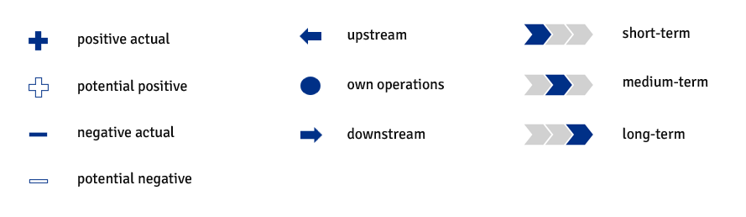
Key:

Subtopic Material topic
Impact/Dependency
Risks Time horizon Area
ESRS E1 Climate change
Climate change adaptation Implementation of climate risk mitigation measures / Ensuring an adequate water level for cooling the Kozienice Power Plant Physical risks – drought or heatwave threats that may result in loss of revenue due to reduced electricity production in connection with the inability to cool the units. Generation, Distribution
Climate change mitigation Limited actions in the area of climate change mitigation Transition risk – Risk of being accused of greenwashing. Enea Group
Climate change mitigation Limited actions in the area of climate change mitigation Transition risk – Risk of rating downgrade, which may multidimensionally affect Enea Group’s financing. Enea Group
Climate change mitigation Limited actions in the area of climate change mitigation Transition risk – Risk of delay in the implementation or non-completion of the project to build gas-steam units at the Kozienice Power Plant. Generation
Climate change mitigation Development of RES sources and new business lines / dependency on markets and technologies Transition risk – Risk related to delay in achieving the strategic goals of Enea Group resulting from uncertainty in the acquisition of RES assets. Generation
Climate change mitigation Development of RES sources and new business lines / dependency on markets and technologies Transition risk – Risk of delays and limitations in connecting new RES generation sources to the distribution network. Distribution
Climate change mitigation Development of RES sources and new business lines / dependency on markets and technologies Transition risk – Risk of inability to effectively manage RES generation sources connected to the distribution network. Distribution, Trading
Climate change mitigation Development of RES sources and new business lines / dependency on markets and technologies Transition risk – Regulatory risk in the area of biomass. Trading, Generation
Climate change mitigation Development of RES sources and new business lines / dependency on markets and technologies Transition risk – Risk of changing demand for Enea’s services in the area of electricity (ESA). Enea Group
Climate change mitigation Coal asset transformation Transition risk – Risk of using technologies that will be excluded from operation due to climate regulations. Generation
Climate change mitigation Coal asset transformation Transition risk – Risk of high-emission units being displaced from the merit order curve. Generation, Trading
Climate change mitigation Coal asset transformation Transition risk – Risk of inability to secure the EUA purchase price. Enea Group
Climate change mitigation Coal asset transformation Transition risk – Risk of energy transformation impact on the mining segment. Mining
Climate change mitigation Coal asset transformation Transition risk – Risk of devaluation/depreciation of climate-change-related assets. Generation
Climate change mitigation Coal asset transformation Transition risk – Risk of failing to obtain satisfactory revenues from the Capacity Market for units in Kozienice as part of supplementary auctions. Generation
Climate change mitigation Coal asset transformation Transition risk – Risk of gas price volatility. Generation
Climate change mitigation Coal asset transformation Transition risk – Risk of high volatility of price paths for long-term financial projections. Trading
Climate change mitigation Greenhouse gas emissions Transition risk – Risk of non-compliance with GHG emission requirements. Generation
ESRS E2 Pollution
Water pollution Pollution of rivers by power plants Risk of loss of reputation, disputes with NGOs, lawsuits, and fines for river pollution. Generation
Water pollution Pollution of rivers by power plants Risk of denial of consent for use or significant limitation of the possibility of using water resources in connection with applicable legal regulations (including Nature Restoration Law and the Water Framework Directive). Generation
ESRS E3 Water and marine resources
Water Water intake/ Water discharge Risk of denial of consent for use or significant limitation of the possibility of using water resources in connection with applicable legal regulations (including Nature Restoration Law and the Water Framework Directive). Generation, Mining
Water Water intake/ Water discharge Risk of loss of reputation in connection with the use of limited water resources. Generation
Water Water intake/ Water discharge Risk of inability to cool units with open cooling systems caused by low water levels in the Vistula, resulting in reduced electricity production. Generation
ESRS E5 Circular economy
Resource inflows, including resource use Use of biomass Regulatory and market risk of limited availability or unavailability of biomass (wood, agricultural) resulting in failure to meet emission parameters and loss of Capacity Market revenues. Generation
Resource inflows, including resource use Use of biomass Risk of NGO conflicts due to the use of biomass. Generation
ESRS S1 Own workforce
Working conditions Employment changes related to the Enea Group energy transformation Reputational risk related to negative reception by employees of changes in the employment structure resulting from energy transformation – social protests. Enea Group
Working conditions Implemented OHS system Risk of work accidents, which may result in loss of reputation, compensation, lawsuits, and fines. Enea Group
ESRS S4 Consumers and end-users
Social inclusion of consumers or end-users Respecting customer rights and sales standards Risk of lawsuits and fines for violating fair marketing practices. Enea Group
Social inclusion of consumers or end-users Respecting customer rights and sales standards Regulatory risk and greenwashing risk in Enea Group’s communication in accordance with the future Green Claims Directive. Enea Group
Social inclusion of consumers or end-users Violations of competitiveness protection regulations Risk of loss of reputation, lawsuits, and fines for violating collective consumer interests. Enea Group
Social inclusion of consumers or end-users Violations of competitiveness protection regulations Risk of having to pay compensation in accordance with actions indicated in UOKiK proceedings regarding price-guaranteed contracts. Enea Group
Social inclusion of consumers or end-users Topic specific to Enea Group – Ensuring reliable energy supplies Risk of limited possibilities to finance modernization and network expansion aimed at ensuring supply reliability and adapting the network to changes resulting from energy transformation. Distribution
Social inclusion of consumers or end-users Topic specific to Enea Group – Modernization of the distribution network and support for RES development Risk of increased instability of network operation caused by connecting new RES. Distribution
Social inclusion of consumers or end-users Topic specific to Enea Group – Modernization of the distribution network and support for RES development Risk of limited possibilities to finance modernization and network expansion aimed at adapting the network to changes resulting from energy transformation. Distribution
Social inclusion of consumers or end-users Topic specific to Enea Group – Modernization of the distribution network and support for RES development Risk of delays and limitations in connecting new RES generation sources to the distribution network. Distribution
Social inclusion of consumers or end-users Topic specific to Enea Group – Modernization of the distribution network and support for RES development Risk of limited possibilities to effectively manage RES generation sources connected to the distribution network. Distribution
ESRS G1 Business conduct
Political engagement and lobbying Maintaining dialogue with government entities (Dialogue with public administration and industry organizations to shape regulations) Risk of political volatility and energy sector direction, resulting in inefficient Enea Group operations. Enea Group
Political engagement and lobbying Maintaining dialogue with government entities (Dialogue with public administration and industry organizations to shape regulations) Risk of lobbying for energy industry business interests over ESG benefits. Enea Group
Corruption and bribery Conducting regular anti-corruption training Risk of increased corruption incidents. Enea Group
Topics specific to the company Cybersecurity Risk of cyberattacks on IT/OT systems and infrastructure (telecommunications security). Enea Group
Subtopic Material topic
Impact/Dependency
Risks Time horizon Area
ESRS E1 Climate change
Climate change adaptation Implementation of climate risk mitigation measures / Ensuring an adequate water level for cooling the Kozienice Power Plant Physical risks – drought or heatwave threats that may result in loss of revenue due to reduced electricity production in connection with the inability to cool the units. Generation, Distribution
Climate change mitigation Limited actions in the area of climate change mitigation Transition risk – Risk of being accused of greenwashing. Enea Group
Climate change mitigation Limited actions in the area of climate change mitigation Transition risk – Risk of rating downgrade, which may multidimensionally affect Enea Group’s financing. Enea Group
Climate change mitigation Limited actions in the area of climate change mitigation Transition risk – Risk of delay in the implementation or non-completion of the project to build gas-steam units at the Kozienice Power Plant. Generation
Climate change mitigation Development of RES sources and new business lines / dependency on markets and technologies Transition risk – Risk related to delay in achieving the strategic goals of Enea Group resulting from uncertainty in the acquisition of RES assets. Generation
Climate change mitigation Development of RES sources and new business lines / dependency on markets and technologies Transition risk – Risk of delays and limitations in connecting new RES generation sources to the distribution network. Distribution
Climate change mitigation Development of RES sources and new business lines / dependency on markets and technologies Transition risk – Risk of inability to effectively manage RES generation sources connected to the distribution network. Distribution, Trading
Climate change mitigation Development of RES sources and new business lines / dependency on markets and technologies Transition risk – Regulatory risk in the area of biomass. Trading, Generation
Climate change mitigation Development of RES sources and new business lines / dependency on markets and technologies Transition risk – Risk of changing demand for Enea’s services in the area of electricity (ESA). Enea Group
Climate change mitigation Coal asset transformation Transition risk – Risk of using technologies that will be excluded from operation due to climate regulations. Generation
Climate change mitigation Coal asset transformation Transition risk – Risk of high-emission units being displaced from the merit order curve. Generation, Trading
Climate change mitigation Coal asset transformation Transition risk – Risk of inability to secure the EUA purchase price. Enea Group
Climate change mitigation Coal asset transformation Transition risk – Risk of energy transformation impact on the mining segment. Mining
Climate change mitigation Coal asset transformation Transition risk – Risk of devaluation/depreciation of climate-change-related assets. Generation
Climate change mitigation Coal asset transformation Transition risk – Risk of failing to obtain satisfactory revenues from the Capacity Market for units in Kozienice as part of supplementary auctions. Generation
Climate change mitigation Coal asset transformation Transition risk – Risk of gas price volatility. Generation
Climate change mitigation Coal asset transformation Transition risk – Risk of high volatility of price paths for long-term financial projections. Trading
Climate change mitigation Greenhouse gas emissions Transition risk – Risk of non-compliance with GHG emission requirements. Generation
ESRS E2 Pollution
Water pollution Pollution of rivers by power plants Risk of loss of reputation, disputes with NGOs, lawsuits, and fines for river pollution. Generation
Water pollution Pollution of rivers by power plants Risk of denial of consent for use or significant limitation of the possibility of using water resources in connection with applicable legal regulations (including Nature Restoration Law and the Water Framework Directive). Generation
ESRS E3 Water and marine resources
Water Water intake/ Water discharge Risk of denial of consent for use or significant limitation of the possibility of using water resources in connection with applicable legal regulations (including Nature Restoration Law and the Water Framework Directive). Generation, Mining
Water Water intake/ Water discharge Risk of loss of reputation in connection with the use of limited water resources. Generation
Water Water intake/ Water discharge Risk of inability to cool units with open cooling systems caused by low water levels in the Vistula, resulting in reduced electricity production. Generation
ESRS E5 Circular economy
Resource inflows, including resource use Use of biomass Regulatory and market risk of limited availability or unavailability of biomass (wood, agricultural) resulting in failure to meet emission parameters and loss of Capacity Market revenues. Generation
Resource inflows, including resource use Use of biomass Risk of NGO conflicts due to the use of biomass. Generation
ESRS S1 Own workforce
Working conditions Employment changes related to the Enea Group energy transformation Reputational risk related to negative reception by employees of changes in the employment structure resulting from energy transformation – social protests. Enea Group
Working conditions Implemented OHS system Risk of work accidents, which may result in loss of reputation, compensation, lawsuits, and fines. Enea Group
ESRS S4 Consumers and end-users
Social inclusion of consumers or end-users Respecting customer rights and sales standards Risk of lawsuits and fines for violating fair marketing practices. Enea Group
Social inclusion of consumers or end-users Respecting customer rights and sales standards Regulatory risk and greenwashing risk in Enea Group’s communication in accordance with the future Green Claims Directive. Enea Group
Social inclusion of consumers or end-users Violations of competitiveness protection regulations Risk of loss of reputation, lawsuits, and fines for violating collective consumer interests. Enea Group
Social inclusion of consumers or end-users Violations of competitiveness protection regulations Risk of having to pay compensation in accordance with actions indicated in UOKiK proceedings regarding price-guaranteed contracts. Enea Group
Social inclusion of consumers or end-users Topic specific to Enea Group – Ensuring reliable energy supplies Risk of limited possibilities to finance modernization and network expansion aimed at ensuring supply reliability and adapting the network to changes resulting from energy transformation. Distribution
Social inclusion of consumers or end-users Topic specific to Enea Group – Modernization of the distribution network and support for RES development Risk of increased instability of network operation caused by connecting new RES. Distribution
Social inclusion of consumers or end-users Topic specific to Enea Group – Modernization of the distribution network and support for RES development Risk of limited possibilities to finance modernization and network expansion aimed at adapting the network to changes resulting from energy transformation. Distribution
Social inclusion of consumers or end-users Topic specific to Enea Group – Modernization of the distribution network and support for RES development Risk of delays and limitations in connecting new RES generation sources to the distribution network. Distribution
Social inclusion of consumers or end-users Topic specific to Enea Group – Modernization of the distribution network and support for RES development Risk of limited possibilities to effectively manage RES generation sources connected to the distribution network. Distribution
ESRS G1 Business conduct
Political engagement and lobbying Maintaining dialogue with government entities (Dialogue with public administration and industry organizations to shape regulations) Risk of political volatility and energy sector direction, resulting in inefficient Enea Group operations. Enea Group
Political engagement and lobbying Maintaining dialogue with government entities (Dialogue with public administration and industry organizations to shape regulations) Risk of lobbying for energy industry business interests over ESG benefits. Enea Group
Corruption and bribery Conducting regular anti-corruption training Risk of increased corruption incidents. Enea Group
Topics specific to the company Cybersecurity Risk of cyberattacks on IT/OT systems and infrastructure (telecommunications security). Enea Group

Key:

Subtopic Material topic
Impact/Dependency
Opportunity Time horizon Area
ESRS E1 Climate change
Climate change mitigation Development of RES sources and new business lines / dependency on markets and technologies Greater availability and lower costs of technologies for the production and storage of energy from RES. Generation
Climate change mitigation Development of RES sources and new business lines / dependency on markets and technologies Implementation of modern systems for flexible and intelligent management of distribution network traffic. Distribution
Climate change mitigation Development of RES sources and new business lines / dependency on markets and technologies Development of energy technologies and investments including, among others, energy storage technologies, smart metering and energy management systems, electromobility, alternative fuels, participation in the creation and operation of energy islands. Distribution,
Trading
Climate change mitigation Development of RES sources and new business lines / dependency on markets and technologies Independence from conventional (fossil) raw materials and their price volatility. Trading, Generation
Climate change mitigation Development of RES sources and new business lines / dependency on markets and technologies Expanding the offer and client portfolio in connection with the introduction of green products and widespread use of new technologies. Enea Group
Climate change mitigation Development of RES sources and new business lines / dependency on markets and technologies Greater access to low-cost or cost-free financial incentives (grants, loans). Enea Group
Climate change mitigation Coal asset transformation Greater access to global financial and insurance markets due to a consistent decarbonization policy. Enea Group
Climate change mitigation Coal asset transformation Replacing the existing coal-based production profile with a transition fuel while taking into account a flexible production profile. Generation, Trading
Climate change mitigation Coal asset transformation Independence from CO2 emission allowance price volatility. Trading
Climate change mitigation Improving energy efficiency Developed offer of products related to energy efficiency. Trading
Climate change mitigation Improving energy efficiency Further decarbonization of heat and electricity production while taking into account a flexible production profile, along with optimization of energy consumption and improvement of energy efficiency of the heating system and facilities connected to it through the development of new technologies. Generation
Climate change mitigation Improving energy efficiency Development of cooperation with local communities and building modern, comprehensive solutions, e.g., in connection with the implementation of the concept of energy clusters (energy cooperatives, self-sufficient energy communities). Trading
ESRS E3 Water and marine resources
Marine resources Impact of wind power plant construction on marine resources Possibility of expanding Enea Group’s activities and increasing the potential for energy production from RES and increasing competitiveness. Generation
ESRS E5 Circular economy
Resource outflows related to products and services Management of by-products from the combustion and flue gas desulfurization process (ashes, slag, gypsum) Possibility of recycling by-products of combustion and flue gas desulfurization, resulting in reduced disposal costs. Generation
Resource outflows related to products and services Management of by-products from the combustion and flue gas desulfurization process (ashes, slag, gypsum) Possibility of increasing the value and sale of by-products of combustion and flue gas desulfurization, which can generate additional revenue. Generation
ESRS S1 Own workforce
Equal treatment and equal opportunities for all Training and skills development Possibility of increasing employee productivity and competencies, which will increase the efficiency of Enea Group’s operations. Enea Group
ESRS S4 Consumers and end-users
Social inclusion of consumers or end-users Topic specific to Enea Group – Modernization of the distribution network and support for RES development Possibility of developing new types of system services in the area of flexibility services, such as Intervention Active Power Delivery, Intervention Reactive Power Regulation. Distribution
Social inclusion of consumers or end-users Topic specific to Enea Group – Modernization of the distribution network and support for RES development Reputational opportunities thanks to enabling the transmission of energy from RES from other entities and increasing the share of energy from RES in the country’s energy mix. Distribution
Social inclusion of consumers or end-users Topic specific to Enea Group – Modernization of the distribution network and support for RES development Possibility of developing a smart distribution network aimed at, among others, improving network instability. Distribution
Social inclusion of consumers or end-users Topic specific to Enea Group – Modernization of the distribution network and support for RES development Possibility of obtaining financing in the form of grants, subsidies for the implementation of projects enabling RES development. Distribution
Social inclusion of consumers or end-users Topic specific to Enea Group – Modernization of the distribution network and support for RES development Possibility of obtaining better ratings in ESG ratings resulting from actions enabling RES development. Distribution
ESRS G1 Business conduct
Political engagement and lobbying Maintaining dialogue with government entities
(Dialogue with public administration and industry organizations to shape regulations)
Development of relations with authorities and the industry. Enea Group
Subtopic Material topic
Impact/Dependency
Opportunity Time horizon Area
ESRS E1 Climate change
Climate change mitigation Development of RES sources and new business lines / dependency on markets and technologies Greater availability and lower costs of technologies for the production and storage of energy from RES. Generation
Climate change mitigation Development of RES sources and new business lines / dependency on markets and technologies Implementation of modern systems for flexible and intelligent management of distribution network traffic. Distribution
Climate change mitigation Development of RES sources and new business lines / dependency on markets and technologies Development of energy technologies and investments including, among others, energy storage technologies, smart metering and energy management systems, electromobility, alternative fuels, participation in the creation and operation of energy islands. Distribution,
Trading
Climate change mitigation Development of RES sources and new business lines / dependency on markets and technologies Independence from conventional (fossil) raw materials and their price volatility. Trading, Generation
Climate change mitigation Development of RES sources and new business lines / dependency on markets and technologies Expanding the offer and client portfolio in connection with the introduction of green products and widespread use of new technologies. Enea Group
Climate change mitigation Development of RES sources and new business lines / dependency on markets and technologies Greater access to low-cost or cost-free financial incentives (grants, loans). Enea Group
Climate change mitigation Coal asset transformation Greater access to global financial and insurance markets due to a consistent decarbonization policy. Enea Group
Climate change mitigation Coal asset transformation Replacing the existing coal-based production profile with a transition fuel while taking into account a flexible production profile. Generation, Trading
Climate change mitigation Coal asset transformation Independence from CO2 emission allowance price volatility. Trading
Climate change mitigation Improving energy efficiency Developed offer of products related to energy efficiency. Trading
Climate change mitigation Improving energy efficiency Further decarbonization of heat and electricity production while taking into account a flexible production profile, along with optimization of energy consumption and improvement of energy efficiency of the heating system and facilities connected to it through the development of new technologies. Generation
Climate change mitigation Improving energy efficiency Development of cooperation with local communities and building modern, comprehensive solutions, e.g., in connection with the implementation of the concept of energy clusters (energy cooperatives, self-sufficient energy communities). Trading
ESRS E3 Water and marine resources
Marine resources Impact of wind power plant construction on marine resources Possibility of expanding Enea Group’s activities and increasing the potential for energy production from RES and increasing competitiveness. Generation
ESRS E5 Circular economy
Resource outflows related to products and services Management of by-products from the combustion and flue gas desulfurization process (ashes, slag, gypsum) Possibility of recycling by-products of combustion and flue gas desulfurization, resulting in reduced disposal costs. Generation
Resource outflows related to products and services Management of by-products from the combustion and flue gas desulfurization process (ashes, slag, gypsum) Possibility of increasing the value and sale of by-products of combustion and flue gas desulfurization, which can generate additional revenue. Generation
ESRS S1 Own workforce
Equal treatment and equal opportunities for all Training and skills development Possibility of increasing employee productivity and competencies, which will increase the efficiency of Enea Group’s operations. Enea Group
ESRS S4 Consumers and end-users
Social inclusion of consumers or end-users Topic specific to Enea Group – Modernization of the distribution network and support for RES development Possibility of developing new types of system services in the area of flexibility services, such as Intervention Active Power Delivery, Intervention Reactive Power Regulation. Distribution
Social inclusion of consumers or end-users Topic specific to Enea Group – Modernization of the distribution network and support for RES development Reputational opportunities thanks to enabling the transmission of energy from RES from other entities and increasing the share of energy from RES in the country’s energy mix. Distribution
Social inclusion of consumers or end-users Topic specific to Enea Group – Modernization of the distribution network and support for RES development Possibility of developing a smart distribution network aimed at, among others, improving network instability. Distribution
Social inclusion of consumers or end-users Topic specific to Enea Group – Modernization of the distribution network and support for RES development Possibility of obtaining financing in the form of grants, subsidies for the implementation of projects enabling RES development. Distribution
Social inclusion of consumers or end-users Topic specific to Enea Group – Modernization of the distribution network and support for RES development Possibility of obtaining better ratings in ESG ratings resulting from actions enabling RES development. Distribution
ESRS G1 Business conduct
Political engagement and lobbying Maintaining dialogue with government entities
(Dialogue with public administration and industry organizations to shape regulations)
Development of relations with authorities and the industry. Enea Group

Key:

The table below presents material changes in terms of impacts, risks and opportunities compared to the list identified in 2024.

Change category Description of the change Material impacts, risks and opportunities (IRO)
EFRAG’s position on compliance activities, in accordance with the simplified ESRS standards The change results from an update to the materiality assessment approach, carried out in accordance with EFRAG guidelines. According to the current approach, meeting legal requirements is classified as a compliance action, which serves to mitigate negative impacts, and not as a separate positive impact. This reclassification aims to ensure consistency with current EFRAG guidelines and does not affect the overall content of the report, as relevant issues have been included in the sections regarding identified negative impacts or risks for a given area. Removed IROs:
OHS system
Combating mobbing
Requirements for suppliers
Impact of generation and distribution activities on local communities
Customer data security
Safety of energy use
Marketing practices
Changed IRO:
Diversity management – change of impact from actual positive to potential positive
New IRO The identification of new IROs was a consequence of changing environmental conditions and internal factors. In particular, the update of information regarding the organization’s activities, changes in the market environment, as well as the results of the review and refinement of the double materiality assessment process were taken into account. Newly identified IROs were included in the analysis in accordance with the adopted assessment methodology. Employment and integration of people with disabilities.
Negative impact of generation and distribution activities on water and sanitary conditions of local communities
Commitment to social life.
Compliance with customer rights and sales standards
Irregularities in relationships with suppliers and business partners
Reputational risk related to negative employee reception of changes in the employment structure resulting from energy transformation – social protests
Risk of limited possibilities to finance network modernization and expansion aimed at ensuring supply reliability
Risk of cyberattack on IT/OT systems and infrastructure (telecommunications security)
Risk of volatility in the political situation and energy direction resulting in inefficient Enea Group operations
Risk of lobbying for energy industry business interests over ESG benefits
Removed IRO The removal of selected impacts, risks, and opportunities results from an update of the double materiality analysis, within which part of the items did not meet the definition of IRO or lost relevance. In particular, items that concerned only financial outlays (not qualified as a risk), were covered by other IROs, lost relevance, or were characterized by low probability were removed. These changes ensure greater consistency and adequacy of the analysis results. Climate risks – after a re-analysis, it was concluded that the climate risk analysis is not an impact on climate change adaptation
Financial outlays necessary for infrastructure modernization and the introduction of more effective solutions regarding water consumption – removed, because financial outlays are not a risk
Risk of increased financial outlays for future investments in connection with closed-loop cooling – removed, because financial outlays are not a risk
Construction of offshore wind farms involves financial outlays and the risk of investment failure as well as the risk of conflicts with NGOs regarding the negative impact of wind farms on marine organisms and resources – removed due to the project being suspended
Mining damage and land reclamation are associated with increased operating costs in connection with mitigating negative effects – removed, because financial outlays are not a risk
Regulatory risk e.g., increase in minimum wage, increase in labor taxation may translate into higher personnel costs and an increase in operating costs – removed, because it would not have a major impact on increasing operating costs
Risk of lack of availability of specialized employees – removed due to high flexibility of the salary offer
Risk of increased severance pay costs – removed due to the takeover of severance pay financing by ZUS (Social Insurance Institution)
Regulatory risk in connection with the EU directive on the participation of women on the boards of listed companies – removed, because the Group acts with respect for currently applicable regulations and legal standards – risk unlikely
Lack of supplier verification is associated, among other things, with reputational risk for Enea Group
Implementation of supplier verification processes involves additional financial outlays – removed, because financial outlays are not a risk
Reputational risk in connection with linking Enea Group’s activities to the political situation in the country – removed, because issues of the political situation were already included in the risk – Risk of volatility in the political situation and energy direction resulting in inefficient Enea Group operations
Construction of offshore wind farms is an opportunity to increase competitiveness and production from RES – removed due to the project being suspended
Possibility of sales activities and increasing the client base outside of Enea Group’s distribution area – removed due to low materiality
Opportunities for cooperation with partners demanding in terms of ESG, better assessment in ratings, access to financing – removed due to low materiality
Update of assessment/ nature of impact The change results from an update of the identified IROs conducted as part of the periodic review of the double materiality analysis. The update took into account the availability of new information, changes in the organization’s business environment, and the refinement of data used in the assessment process. These changes could have affected the assessment level of individual IROs. Removed IROs:
Level of knowledge regarding combating and preventing corruption in Group companies – assessment changed to below the materiality threshold due to training conducted in 2025.
Safety of energy use is associated with financial outlays necessary to ensure appropriate electricity parameters. There is a risk of financial penalties and lawsuits in case of failure to meet parameters – aggregation and change of assessment to below the materiality threshold
Reliability of energy supplies is associated with financial outlays necessary to ensure it. There is a risk of financial penalties and lawsuits in case of failure to meet energy law provisions – aggregation and change of assessment to below the materiality threshold
Increased costs of Enea Group’s adaptation to new regulations and acquiring competencies in this area – assessment changed to below materiality
Risk of limited access to business partners due to reporting incomplete employee training in the area of anti-corruption – assessment changed to below materiality
Newly added IROs:
Risk of bird and bat collisions with wind turbines – new stakeholder assessment made the impact material in 2025.
Risk of rating downgrade, which may multidimensionally affect Enea Group’s financing – re-analysis made the impact material in 2025.
Negative impact of mining, generation, and distribution activities on land – re-analysis made the impact material in 2025.
Change in the nature of impact:
Pay equality – due to the calculation of the pay gap in 2024 and its low level, the impact was changed from potential negative to actual positive
IRO Aggregation The change results from combining selected IROs with a similar character or source into one category in order to increase transparency and consistency in the presentation of the double materiality analysis results. Updated but still material IROs
Use of hard coal for energy production – impact included in emissions and raw material use
Pollution of rivers by hydroelectric power plants – impact included in the impact of hydroelectric power plants on the state of rivers
Water consumption in the value chain – change to Water consumption taking into account the value chain and own operations
Mining damage and land reclamation – impact aggregated with the impact of mines on ecosystem degradation and destabilization
Commitment to national energy policy – aggregation of two impacts into one: maintaining dialogue with government entities
IRO Disaggregation The change results from separating selected impacts, risks, and opportunities into more detailed elements in order to better reflect their nature and sources. Disaggregation was carried out to increase the transparency of the analysis and consistency with the adopted double materiality assessment methodology. Updated IROs:
Pollution of rivers by conventional power plants and mines – separated into pollution of rivers by power plants (material impact) and pollution of rivers by mines (immaterial impact)
Potentially dangerous substances or substances of concern – separated into use of potentially dangerous substances (immaterial impact) and emission of substances of very high concern (material impact)
Pollution of rivers with salts and heavy metals – separated into pollution of rivers with salts and heavy metals (material impact) and pollution of rivers with salts and heavy metals by mines (immaterial impact)
Pollution of rivers by conventional and hydroelectric power plants is associated with regulatory risks related to the Nature Restoration Law and the risk of financial penalties and lawsuits – separation of risk into: Risk of loss of reputation, disputes with NGOs, lawsuits, and fines for river pollution and Risk of denial of consent for use or significant limitation of the possibility of using water resources in connection with applicable legal regulations (including Nature Restoration Law and the Water Framework Directive)
Cooling coal power plants is associated with the risk of reduced energy production, reputational and regulatory risks, and increased financial outlays in connection with the transition to closed-loop cooling systems – separation of risk into: Risk of denial of consent for use or significant limitation of the possibility of using water resources in connection with applicable legal regulations (including Nature Restoration Law and the Water Framework Directive), Risk of loss of reputation in connection with the use of limited water resources, Risk of inability to cool units with open cooling systems caused by low water levels in the Vistula resulting in reduced electricity production
Trade unions – separated into operating trade unions (positive impact) and trade unions hindering dialogue and decision-making (negative impact)
Biomass use is associated with regulatory risks regarding the use of wood biomass and investment outlays. Risk of conflicts with NGOs due to the use of primary wood biomass, i.e., contributing to deforestation – separated into: Regulatory and market risk of limited availability or unavailability of biomass (wood, agricultural) resulting in failure to meet emission parameters and loss of Capacity Market revenues and Risk of conflicts with NGOs due to the use of biomass
Independence of the company’s activities from the generation and transmission of energy from fossil fuels. Reputational opportunity thanks to enabling the transmission of energy from RES from other entities and increasing the share of energy from RES in the country’s energy mix. Development of a smart distribution network that mitigates the risk of infrastructure instability. Opportunity to obtain financing in the form of grants, subsidies for the implementation of projects enabling adaptation to climate change. Possibility of obtaining better ratings in ESG ratings – separated into five opportunities related to the impact: Modernization of the distribution network and support for RES development
Risk of violating competition protection regulations may involve financial penalties, reputational damage, lawsuits, and the need to pay compensation – separated into: Risk of loss of reputation, lawsuits, and fines for violating collective consumer interests and Risk of necessity to pay compensation in accordance with actions indicated in UOKiK proceedings regarding price-guaranteed contracts
Correction/update of IRO description Changes to the descriptions of individual IROs result from the need to ensure greater transparency and consistency with the current double materiality assessment methodology. The corrections are editorial and clarifying in nature, including adjusting descriptions to the current context of the organization’s activities and reporting guidelines. These changes do not affect the result of the materiality assessment or the classification of individual IROs. Changes to the descriptions of individual IROs result from the need to ensure greater transparency and consistency with the current double materiality assessment methodology. The corrections are editorial and clarifying in nature, including adjusting descriptions to the current context of the organization’s activities and reporting guidelines. These changes do not affect the result of the materiality assessment or the classification of individual IROs.
Change category Description of the change Material impacts, risks and opportunities (IRO)
EFRAG’s position on compliance activities, in accordance with the simplified ESRS standards The change results from an update to the materiality assessment approach, carried out in accordance with EFRAG guidelines. According to the current approach, meeting legal requirements is classified as a compliance action, which serves to mitigate negative impacts, and not as a separate positive impact. This reclassification aims to ensure consistency with current EFRAG guidelines and does not affect the overall content of the report, as relevant issues have been included in the sections regarding identified negative impacts or risks for a given area. Removed IROs:
OHS system
Combating mobbing
Requirements for suppliers
Impact of generation and distribution activities on local communities
Customer data security
Safety of energy use
Marketing practices
Changed IRO:
Diversity management – change of impact from actual positive to potential positive
New IRO The identification of new IROs was a consequence of changing environmental conditions and internal factors. In particular, the update of information regarding the organization’s activities, changes in the market environment, as well as the results of the review and refinement of the double materiality assessment process were taken into account. Newly identified IROs were included in the analysis in accordance with the adopted assessment methodology. Employment and integration of people with disabilities.
Negative impact of generation and distribution activities on water and sanitary conditions of local communities
Commitment to social life.
Compliance with customer rights and sales standards
Irregularities in relationships with suppliers and business partners
Reputational risk related to negative employee reception of changes in the employment structure resulting from energy transformation – social protests
Risk of limited possibilities to finance network modernization and expansion aimed at ensuring supply reliability
Risk of cyberattack on IT/OT systems and infrastructure (telecommunications security)
Risk of volatility in the political situation and energy direction resulting in inefficient Enea Group operations
Risk of lobbying for energy industry business interests over ESG benefits
Removed IRO The removal of selected impacts, risks, and opportunities results from an update of the double materiality analysis, within which part of the items did not meet the definition of IRO or lost relevance. In particular, items that concerned only financial outlays (not qualified as a risk), were covered by other IROs, lost relevance, or were characterized by low probability were removed. These changes ensure greater consistency and adequacy of the analysis results. Climate risks – after a re-analysis, it was concluded that the climate risk analysis is not an impact on climate change adaptation
Financial outlays necessary for infrastructure modernization and the introduction of more effective solutions regarding water consumption – removed, because financial outlays are not a risk
Risk of increased financial outlays for future investments in connection with closed-loop cooling – removed, because financial outlays are not a risk
Construction of offshore wind farms involves financial outlays and the risk of investment failure as well as the risk of conflicts with NGOs regarding the negative impact of wind farms on marine organisms and resources – removed due to the project being suspended
Mining damage and land reclamation are associated with increased operating costs in connection with mitigating negative effects – removed, because financial outlays are not a risk
Regulatory risk e.g., increase in minimum wage, increase in labor taxation may translate into higher personnel costs and an increase in operating costs – removed, because it would not have a major impact on increasing operating costs
Risk of lack of availability of specialized employees – removed due to high flexibility of the salary offer
Risk of increased severance pay costs – removed due to the takeover of severance pay financing by ZUS (Social Insurance Institution)
Regulatory risk in connection with the EU directive on the participation of women on the boards of listed companies – removed, because the Group acts with respect for currently applicable regulations and legal standards – risk unlikely
Lack of supplier verification is associated, among other things, with reputational risk for Enea Group
Implementation of supplier verification processes involves additional financial outlays – removed, because financial outlays are not a risk
Reputational risk in connection with linking Enea Group’s activities to the political situation in the country – removed, because issues of the political situation were already included in the risk – Risk of volatility in the political situation and energy direction resulting in inefficient Enea Group operations
Construction of offshore wind farms is an opportunity to increase competitiveness and production from RES – removed due to the project being suspended
Possibility of sales activities and increasing the client base outside of Enea Group’s distribution area – removed due to low materiality
Opportunities for cooperation with partners demanding in terms of ESG, better assessment in ratings, access to financing – removed due to low materiality
Update of assessment/ nature of impact The change results from an update of the identified IROs conducted as part of the periodic review of the double materiality analysis. The update took into account the availability of new information, changes in the organization’s business environment, and the refinement of data used in the assessment process. These changes could have affected the assessment level of individual IROs. Removed IROs:
Level of knowledge regarding combating and preventing corruption in Group companies – assessment changed to below the materiality threshold due to training conducted in 2025.
Safety of energy use is associated with financial outlays necessary to ensure appropriate electricity parameters. There is a risk of financial penalties and lawsuits in case of failure to meet parameters – aggregation and change of assessment to below the materiality threshold
Reliability of energy supplies is associated with financial outlays necessary to ensure it. There is a risk of financial penalties and lawsuits in case of failure to meet energy law provisions – aggregation and change of assessment to below the materiality threshold
Increased costs of Enea Group’s adaptation to new regulations and acquiring competencies in this area – assessment changed to below materiality
Risk of limited access to business partners due to reporting incomplete employee training in the area of anti-corruption – assessment changed to below materiality
Newly added IROs:
Risk of bird and bat collisions with wind turbines – new stakeholder assessment made the impact material in 2025.
Risk of rating downgrade, which may multidimensionally affect Enea Group’s financing – re-analysis made the impact material in 2025.
Negative impact of mining, generation, and distribution activities on land – re-analysis made the impact material in 2025.
Change in the nature of impact:
Pay equality – due to the calculation of the pay gap in 2024 and its low level, the impact was changed from potential negative to actual positive
IRO Aggregation The change results from combining selected IROs with a similar character or source into one category in order to increase transparency and consistency in the presentation of the double materiality analysis results. Updated but still material IROs
Use of hard coal for energy production – impact included in emissions and raw material use
Pollution of rivers by hydroelectric power plants – impact included in the impact of hydroelectric power plants on the state of rivers
Water consumption in the value chain – change to Water consumption taking into account the value chain and own operations
Mining damage and land reclamation – impact aggregated with the impact of mines on ecosystem degradation and destabilization
Commitment to national energy policy – aggregation of two impacts into one: maintaining dialogue with government entities
IRO Disaggregation The change results from separating selected impacts, risks, and opportunities into more detailed elements in order to better reflect their nature and sources. Disaggregation was carried out to increase the transparency of the analysis and consistency with the adopted double materiality assessment methodology. Updated IROs:
Pollution of rivers by conventional power plants and mines – separated into pollution of rivers by power plants (material impact) and pollution of rivers by mines (immaterial impact)
Potentially dangerous substances or substances of concern – separated into use of potentially dangerous substances (immaterial impact) and emission of substances of very high concern (material impact)
Pollution of rivers with salts and heavy metals – separated into pollution of rivers with salts and heavy metals (material impact) and pollution of rivers with salts and heavy metals by mines (immaterial impact)
Pollution of rivers by conventional and hydroelectric power plants is associated with regulatory risks related to the Nature Restoration Law and the risk of financial penalties and lawsuits – separation of risk into: Risk of loss of reputation, disputes with NGOs, lawsuits, and fines for river pollution and Risk of denial of consent for use or significant limitation of the possibility of using water resources in connection with applicable legal regulations (including Nature Restoration Law and the Water Framework Directive)
Cooling coal power plants is associated with the risk of reduced energy production, reputational and regulatory risks, and increased financial outlays in connection with the transition to closed-loop cooling systems – separation of risk into: Risk of denial of consent for use or significant limitation of the possibility of using water resources in connection with applicable legal regulations (including Nature Restoration Law and the Water Framework Directive), Risk of loss of reputation in connection with the use of limited water resources, Risk of inability to cool units with open cooling systems caused by low water levels in the Vistula resulting in reduced electricity production
Trade unions – separated into operating trade unions (positive impact) and trade unions hindering dialogue and decision-making (negative impact)
Biomass use is associated with regulatory risks regarding the use of wood biomass and investment outlays. Risk of conflicts with NGOs due to the use of primary wood biomass, i.e., contributing to deforestation – separated into: Regulatory and market risk of limited availability or unavailability of biomass (wood, agricultural) resulting in failure to meet emission parameters and loss of Capacity Market revenues and Risk of conflicts with NGOs due to the use of biomass
Independence of the company’s activities from the generation and transmission of energy from fossil fuels. Reputational opportunity thanks to enabling the transmission of energy from RES from other entities and increasing the share of energy from RES in the country’s energy mix. Development of a smart distribution network that mitigates the risk of infrastructure instability. Opportunity to obtain financing in the form of grants, subsidies for the implementation of projects enabling adaptation to climate change. Possibility of obtaining better ratings in ESG ratings – separated into five opportunities related to the impact: Modernization of the distribution network and support for RES development
Risk of violating competition protection regulations may involve financial penalties, reputational damage, lawsuits, and the need to pay compensation – separated into: Risk of loss of reputation, lawsuits, and fines for violating collective consumer interests and Risk of necessity to pay compensation in accordance with actions indicated in UOKiK proceedings regarding price-guaranteed contracts
Correction/update of IRO description Changes to the descriptions of individual IROs result from the need to ensure greater transparency and consistency with the current double materiality assessment methodology. The corrections are editorial and clarifying in nature, including adjusting descriptions to the current context of the organization’s activities and reporting guidelines. These changes do not affect the result of the materiality assessment or the classification of individual IROs. Changes to the descriptions of individual IROs result from the need to ensure greater transparency and consistency with the current double materiality assessment methodology. The corrections are editorial and clarifying in nature, including adjusting descriptions to the current context of the organization’s activities and reporting guidelines. These changes do not affect the result of the materiality assessment or the classification of individual IROs.
Search results