IRO-1 – Description of the process to identify and assess material impacts, risks and opportunities

The double materiality analysis for the Enea Group is intended to ensure compliance with the European Sustainability Reporting Standards (ESRS), in particular ESRS 1, ESRS 2 (including the guidelines contained in the thematic standards), and EFRAG’s IG 1 guidelines on materiality assessment, as well as to enable informed business decisions that take into account the risks and opportunities associated with sustainable development.

In 2025, as part of its double materiality analysis, the Enea Group updated the material impacts, risks and opportunities identified in the previous year.

The update takes two perspectives into account: the organization’s impact on sustainability issues and the impact of those issues on the company’s financial performance (i.e. financial materiality) This establishes specific standards and requirements that must be disclosed in accordance with the ESRS.

The double materiality analysis process at the Enea Group consisted of six stages:
1
internal and external analysis
2
identification of impacts, risks and opportunities related to sustainability
3
taking stakeholders’ opinions into account
4
assessment of impacts, risks and opportunities
5
determination of the threshold of materiality
6
validation of results

Internal and external analysis

To compile a list of potential impacts, the Group analyzed its operations and business relationships, taking into account the changes that occurred in 2025. The Group operates in Poland, but some of its suppliers are based in other regions of Europe and around the world. The external analysis took into account industry-specific material topics (based on a benchmark of competitors and industry reports) as well as compliance with industry standards (including SASB), which serve as a benchmark for industry best practices. The internal analysis focused on reviewing documents such as the Group’s policies, strategies and environmental reports. In addition, press reports about the Enea Group were analyzed, which allowed for a better understanding of the external point of view.

Based on the ESRS IRO-1 guidelines, the so-called long list of impacts, risks and opportunities for the Enea Group were identified. A list of potentially relevant impacts was drawn up based on the ESRS 1 sustainability matters and the results of external and internal analyses. The list of risks and opportunities was developed based on the list of impacts. In addition, risks and opportunities that do not stem directly from the Group’s activities but, for example, from dependence on a given resource, have been taken into account.

The following methods and assumptions were used in the identification process:

Greenhouse gas emissions across the entire value chain were taken into account in assessing the impacts, risks, and opportunities associated with climate change. The Enea Group owns two power plants in Kozienice and Połaniec, CHP plants in Białystok and Piła, and combined heat and power plants in Białystok, Piła and Oborniki. In 2024, the emission factor of energy generation was 776 kg CO2/MWh (full data on total GHG emissions is presented in the section devoted to indicator E1-6 of this report). The Group’s current operations and the Development Strategy were also analyzed to identify current and future potential sources of emissions and climate-related impacts. A detailed analysis of climate-related risks is presented below in Climate-related risks and opportunities.

The impacts, risks and opportunities associated with pollution were identified based on the SASB standards for the energy sector. The operations carried at each of the Group’s locations were analyzed considering pollution emissions into air, soil and water, as well as the use of substances of concern or substances of very high concern. The activities of the Group’s key suppliers were also taken into account. The impacts, risks and opportunities related to pollution were determined based on scientific articles on the mining and combustion of hard coal and the companies’ environmental reports. They were then assessed based on their severity and likelihood of occurrence. The communities affected by the pollution were not consulted. Issues related to air pollution are relevant to the following companies: Enea Wytwarzanie, Enea Elektrownia Połaniec, Enea Ciepło, MEC Piła, PEC Oborniki and LW Bogdanka; issues related to water pollution are relevant to the following companies: Enea Wytwarzanie, Enea Elektrownia Połaniec and LW Bogdanka. Emissions of substances of concern or substances of very high concern are material for the following companies: Enea Wytwarzanie, Enea Elektrownia Połaniec, Enea Ciepło and LW Bogdanka.

When identifying the impacts, risks and opportunities related to water, all of the Enea Group’s own locations were considered, taking into account, among others, the purpose of the use of water. From the perspective of water resources, the key locations are those related to electricity production, i.e. Enea Wytwarzanie, Enea Elektrownia Połaniec, Enea Nowa Energia and coal mining at LW Bogdanka. The analyses drew on data from the Institute of Meteorology and Water Management, scientific articles and information on water consumption from the Enea Group. The impacts related to water consumption in the Group’s value chain were also analyzed, using information on technological processes related to coal mining and the production of power machinery and equipment, among others, to analyze these impacts. No consultations were carried out with the local communities. Water is a material topic for the Enea Group’s activities related to coal mining and electricity generation at conventional power plants (in Kozienice and Połaniec) and hydroelectric power plants. The use of water in the Group’s supply chain is also a material topic (this includes Poland, Europe, Asia). The Enea Group does not use goods that are material to the health of the marine environment or the conservation of marine resources.

When identifying the impacts, risks and opportunities related to biodiversity and ecosystems, all of Enea Group’s own locations were taken into account, in particular those located near protected areas, as well as upstream and downstream value chains. Based on scientific reports and articles on the impact of coal mining and energy production and distribution on biodiversity, negative impacts of the Enea Group on biodiversity and ecosystems were identified; however, no material risks, opportunities or interdependencies related to biodiversity and ecosystems were identified. When assessing the impacts, risks and opportunities, the strength of the impact on biodiversity and ecosystems was evaluated, in particular the impact on the number of species and the geographical extent of this impact. Potential disruptions to ecosystem services, systemic risks and physical and transition risks related to biodiversity were also taken into account. The analysis took into account that the Group companies are planting new trees in accordance with the environmental decisions received. No scenario analysis regarding biodiversity and ecosystems was conducted, and no consultation with affected communities was carried out. The Enea Group’s facilities are located near biodiversity sensitive areas. For detailed information regarding location and impact on ecosystems, see the chapter Environmental Disclosures in the section concerning biodiversity and ecosystems.

When identifying impacts, risks and opportunities related to circular economy, the resources used and all types of operations conducted by Enea Group were taken into account. Both resource inflows, including the types of fuel used to produce electricity and heat, machinery and equipment used in the Group, and resource outflows, i.e. products sold, were taken into account. The activities of the Group that contribute to circular economy were taken into consideration. Based on information from the Product and Packaging Database, the types of waste were also analyzed. No consultations were carried out with the affected communities. Enea Group companies with material impacts, risks and opportunities related to the use of resources and generation of waste include: Enea Wytwarzanie, Enea Elektrownia Połaniec, Enea Ciepło, MEC Piła, PEC Oborniki and LW Bogdanka. Material resources used in the Group include: hard coal, biomass, equipment and materials used for coal mining. Continuing current practices will result in the continued use of non-renewable resources and the generation of significant amounts of waste. It also involves risks associated with the volatility of raw material prices and the use of technologies that will be phased out due to climate change regulations. Material opportunities offered by circular economy include the sale of combustion by-products that can be used among others in construction. The use of resources is concentrated upstream in the value chain, in the extraction of raw materials and the production of machinery and equipment.

The Enea Group has identified the impacts, risks and opportunities associated with its business practices based on an analysis of its entire operations in the energy sector in Poland and its relationships with suppliers. The criteria applied took into account the specific nature of the Group’s operations and applicable laws. Information on the structure of transactions carried out by the Enea Group was also taken into account.

Taking stakeholders’ opinions into account

As part of the update to the double materiality analysis in September 2025, a survey was conducted again to incorporate stakeholder feedback. Two versions of the survey were prepared – the survey for Enea Group employees included more questions about working conditions than the one for external stakeholders. The remaining issues were consistent. The surveys were distributed by the Enea Group.

Stakeholders indicated the extent to which specific issues in the E, S and G areas should be material for the Enea Group. The selected areas covered several identified factors in order to avoid unnecessarily lengthening the survey. Respondents selected their answers on a five-point scale. 722 responses to the survey questions were received, including 531 from employees. In line with the methodology adopted by the Enea Group, the stakeholders’ assessment accounted for 20% of the final materiality of impact.

Assessment of impacts, risks and opportunities

The materiality analysis in the Enea Group included a comprehensive examination of the organization’s impact on sustainability matters. The identification and assessment covered the following:

  • type of impact (positive/negative and actual/potential),
  • updated three time horizons (short-term, medium-term and long-term),
  • the scale and scope of the impact (for each impact, a rating between 1 and 5, where 1 is the smallest scale/scope and 5 is the largest),
  • reversibility of impact (for all negative impacts, a rating between 1 and 5, where 1 is an impact that does not require reversal and 5 is an impact that is impossible to reverse),
  • probability of impact occurrence (for all potential impacts, a rating between 1 and 5, where 1 is the least chance of materialization and 5 is a certain event).

A weighted average was used to assess the impact, with greater weight being given to severity1 rather than probability. In addition, for some impacts, the disaggregation by subsidiary as referred to in ESRS 1 Section 3.7 para. 55, Section 7.6 para. 104 and Article 63x. para. 8. Act of 6 December 2024 amending the Accounting Act, the Act on Statutory Auditors, Audit Firms and Public Supervision and certain other acts.

All impacts identified were evaluated and categorized by priority. Based on qualitative criteria, ratings from 1 to 5 were given for each criterion for each impact. The final score for the impacts included the expert assessment (80%) and the stakeholder assessment (20%). If a particular impact was not assessed by stakeholders, it was assessed entirely by experts.

The assessment of impact materiality was taken as the basis for financial materiality analysis. Most risks and opportunities are directly related to the impacts identified. In its assessment, the Enea Group refers to the Enea Group’s Methodology for Managing ESG Risks and Opportunities (ESG Methodology). The assessment also covered the risks and opportunities that may arise from dependence on natural and human resources and the risks disclosed in previous ESG reports. The risks and opportunities associated with climate change (E1) were subject to an expanded assessment (update), which included, among other things, a probability assessment based on climate scenarios and an assessment of inherent and residual risks. In accordance with the ESG Methodology, critical and key ESG risks and opportunities, including those related to climate change, have been consolidated with the DMA analysis and will be reported for disclosure purposes in the Sustainability Report.

Risks and opportunities were rated according to their probability (on a scale of 1 to 4) and potential financial impact (on a scale of 1 to 4). The magnitude of the potential financial impact was quantified or described qualitatively, depending on the available data. The final score was obtained by multiplying these two values. A time horizon has also been specified for each risk and opportunity: short-term (up to one year), medium-term (from the second to the end of the fifth year) or long-term (up to 15 years).


1 The severity of impact is determined by the scale, scope and reversibility for negative impacts or the scale and scope for positive impacts. The severity was considered to be a parameter with greater weight because of its lower arbitrariness and error of measurement.

The list of key drivers, risks and opportunities served as the starting point for developing the ESG Strategy

The list of key drivers, risks and opportunities served as the starting point for developing the Sustainability Strategy. Thanks to this, the Enea Group has integrated their management into its overall management process. Furthermore, in accordance with the Enea Group’s Methodology for Managing ESG Risks and Opportunities, critical and key ESG risks are reported to the ESG Committee, the Management Board, and the Supervisory Board of Enea S.A. Information on critical and key ESG risks is used by the Management Board of Enea S.A. in the process of making strategic and operational decisions and by the Supervisory Board of Enea S.A. for the purposes of exercising oversight.

The final results for the impacts ranged from 2.22 to 4.73. The Enea Group has adopted the following materiality thresholds:

  • low materiality: 0-3.0>
  • medium materiality: 3.0-3.5>
  • high materiality: 3.5-4.0>
  • very high materiality: 4.0-5>

The materiality threshold was set at 3.5, i.e. in the middle of the range between the lowest and highest value.

The threshold of materiality in financial assessment was adopted in accordance with the Enea Group ERM Methodology. The risks and opportunities that received a score of at least 8 were considered key, risks and opportunities with a score above 12 were considered critical.

As a result of the update to the Group-level double materiality analysis process, 71 material impacts, 42 material risks and 25 material opportunities were identified.

The update carried out in 2025 did not include a validation workshop; instead, information regarding the IROs was gathered through ongoing collaboration with both units within Enea S.A. and other companies. Information – primarily regarding the impacts – was gathered during dedicated, one-on-one meetings, as well as through email correspondence and telephone conversations. Risks and opportunities were also validated through similar channels within the Group, but ultimately all IROs were validated with the ESG Department during status meetings with the advisor. ESG risks are classified based on an assessment of the likelihood and financial impact of their materialization. Risks with the highest rating, the so-called critical and key risks, are considered material and must be reported for disclosure purposes in the Sustainability Report. In addition, critical and key ESG risks are analyzed to identify other types of risks, known as operational or strategic risks, based on them.

The Enea Group will monitor its potential and actual impacts on people and the environment as well as the risks and opportunities related to sustainability, among other things, by annually reviewing and, if necessary, updating the double materiality analysis.

The methodology for assessing the materiality of the process has changed compared to the previous reporting period (2024). In 2025, the classification of time horizons was refined by introducing a medium‑term horizon, which had previously been included together with the long‑term horizon. As a result, the analysis now covers three time horizons of impact.

A key element of the Enea Group’s strategy is the effective management of climate-related risks and opportunities, with the aim of identifying potential threats early on and capitalizing on the opportunities presented by the energy transition. As a result, the Enea Group is able to actively respond to changes and properly manage the areas of its operations exposed to climate change.

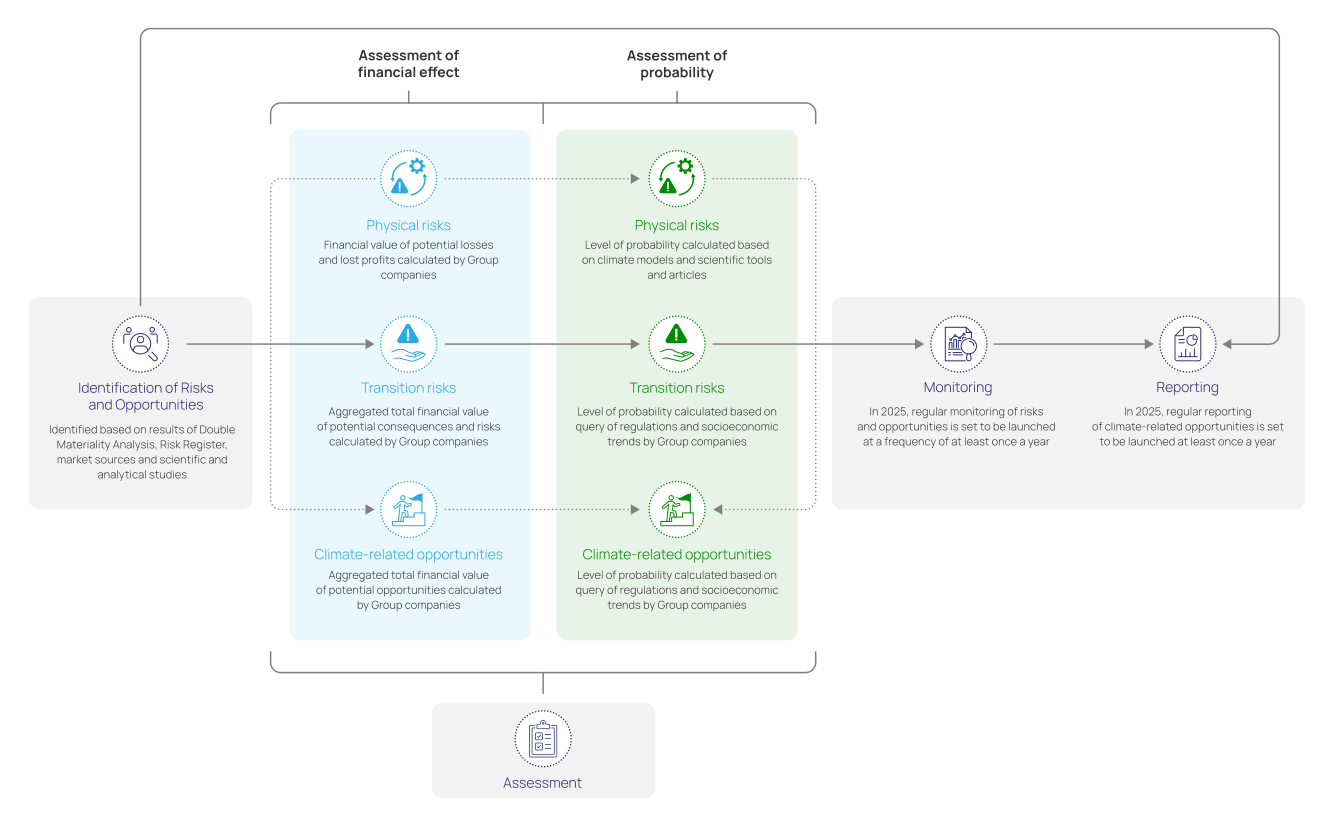
In the process of managing climate risks and opportunities at the Enea Group, an approach consistent with the overall risk management process at the Group has been adopted, which ensures the integrity and effectiveness of actions taken in the organization. For this reason, the process is divided into four main stages in accordance with the risk management process set forth in the Enea Group Risk Management Policy:

1
Identification of climate-related risks and opportunities.
2
Description and assessment of climate-related risks and opportunities.
3
Formulating a strategy for dealing with climate-related risks and opportunities.
4
Monitoring and reporting of climate-related risks and opportunities.

In 2025, the climate risks and opportunities identified and assessed at the individual company level were updated. The results have been consolidated in the table of material risks and opportunities for the entire Group.

The figure below illustrates the process of managing climate-related risks and opportunities.

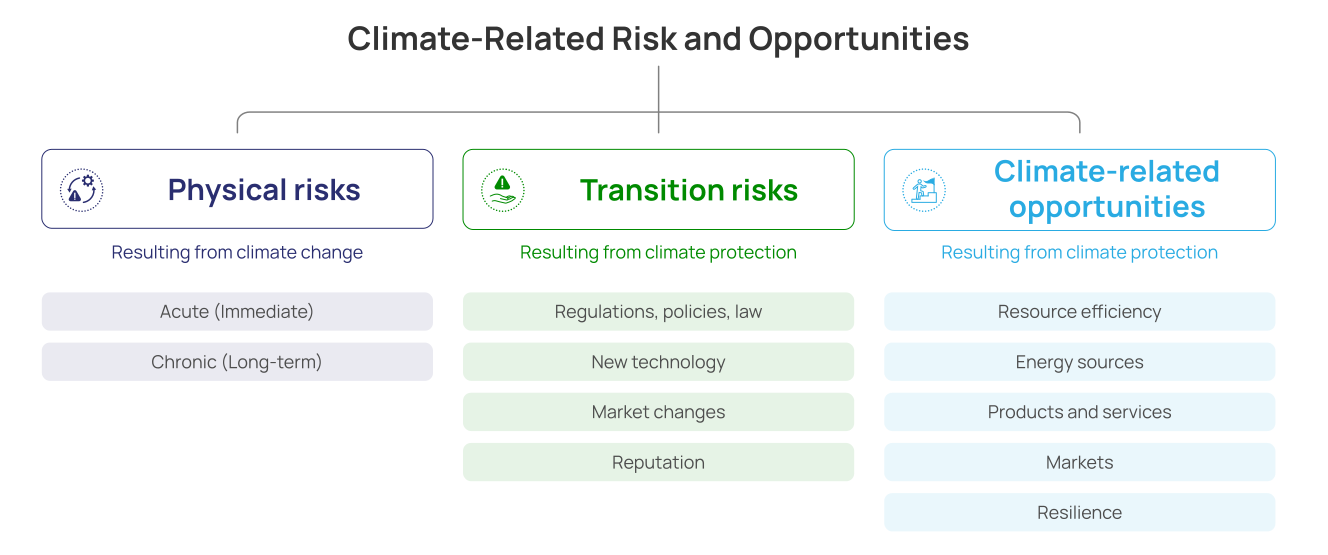
The identification of climate-related risks and opportunities in the Enea Group covered three key areas:

  • physical risks,
  • transition risks,
  • climate-related opportunities.

Physical risks refer to the impact of extreme weather events and long-term climate change on the Group’s infrastructure and operations. Transition risks relate to the challenges of adapting to regulatory, technological and market changes resulting from the global energy transition. The opportunities related to climate change, on the other hand, include the possibility of investing in renewable technologies, improving energy efficiency, and developing new products and services as well as markets that support a sustainable future. The scope of the identification process carried out at the Enea Group is illustrated in the chart below.

The Group’s approach to identifying climate-related risks and opportunities is based on a wide range of source data, including the results of a double materiality analysis, operational risk registers, market sources, and independent scientific and analytical studies.

The next stage – the assessment of climate-related risks and opportunities – is divided into three parallel streams corresponding to the specific types of issues being analyzed (physical risks, transition risks and climate-related opportunities).

As part of the physical risk assessment, all assets and processes of the Enea Group’s key companies that may be exposed to sudden or long-term risks resulting from climate change, as defined in Commission Regulation (EU) 2021/2139 of 4 June 2021, were analyzed.

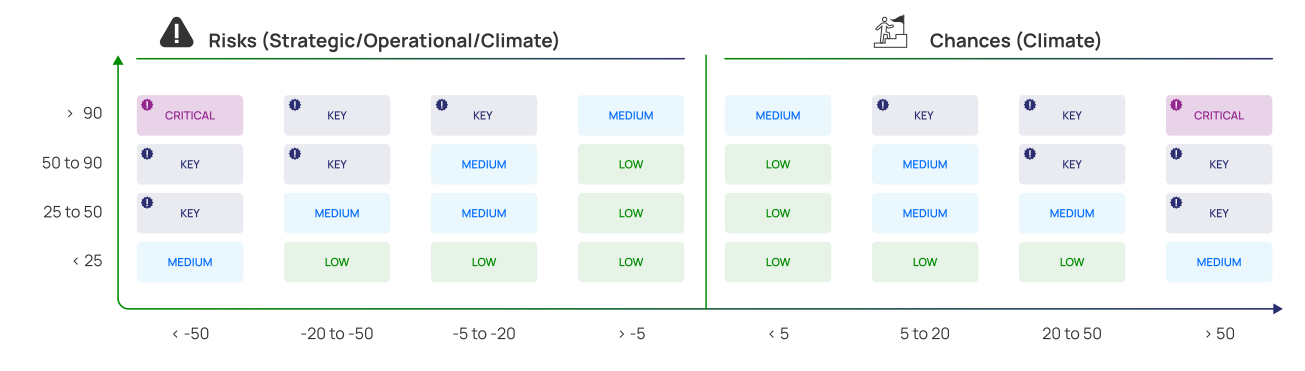
A semi-quantitative approach was used to analyze physical risks. The probability estimation is carried out by the companies being owners of an asset or process exposed to risk and is based on a 4-level risk and opportunity assessment scale applied in the Enea Group, as shown in the figure below. The probability value determined by the companies is then verified through extensive research and tools that utilize climate models.

Enea Group risk and opportunity assessment matrix

To estimate the impact of a given risk materializing, Group companies that own the asset or process exposed to the risk determine the lower and upper limits of potential damage to property and lost profits resulting from the materialization of the risk in question. The financial impact analysis takes into account, in particular:

  • Reduced income due to reduced production capacity (e.g. transportation difficulties, supply chain interruptions) or lower sales/efficiency,
  • Higher costs resulting from negative impact on workers (e.g. health, safety, absenteeism) and reduced revenue,
  • Write-offs and early decommissioning of assets (e.g. damage to property and assets in ‘high-risk’ locations),
  • Increased operating costs (e.g. insufficient water supply for hydroelectric power plants or for cooling nuclear power plants and fossil fuel power plants),
  • Increased investment costs (e.g. damage to facilities),
  • Higher insurance premiums and potentially reduced availability of asset insurance in ‘high-risk’ locations.

The final result of the assessment of physical risks is a matrix showing the risks together with their final assessment calculated as the product of probability and separately the upper and lower limits of estimated loss.

The assessment of transition risks used a qualitative approach based on the Enea Group’s 4-level risk and opportunity assessment scale shown in the figure above, taking into account three time horizons (similar to physical risks) as well as a scenario of high transition risks, i.e. an ambitious decarbonization as defined in the National Energy and Climate Plan.

In our assessment of climate-related opportunities, we have followed the guidelines of the TCFD (Task Force on Climate-Related Financial Disclosures) and applied a qualitative approach based on the Enea Group’s 4-level risk and opportunity assessment scale as shown in the figure above. In this approach, we have taken into account three time horizons (similar to physical risks) as well as the SSP1-RCP2.6, i.e. a sustainable development scenario assuming an average temperature increase by less than 2°C by 2100 compared to the pre-industrial era, developed by the Intergovernmental Panel on Climate Change (IPCC).

Risks and opportunities that were identified as key or critical during the assessment are subject to periodic monitoring and reporting in accordance with the Enea Group’s risk and opportunity assessment scale.

The list of material climate-related risks and opportunities can be found in a table in section SBM-3 of this chapter.

The Enea Group has identified and assessed climate-related physical risks in the areas of activity that have a significant impact on the financial performance, i.e. in Enea Nowa Energia, Enea Ciepło, Enea Elektrownia Połaniec, Enea Wytwarzanie, MEC Piła and Enea Operator. Moreover, Enea S.A., Enea Serwis, Lubelski Węgiel Bogdanka and Enea Elkogaz assessed climate-related physical risks for the operations that were verified for alignment with the EU Taxonomy.

The climate-related hazards were identified and analyzed for the following time horizons:

  • short term: 1 year
  • medium term: 5 years
  • long term: 15 years.

The time horizons were determined based on the regulations (short-term and medium-term). The long term time horizon was set at 15 years to capture the first years of potentially extreme climate changes in Europe and to maintain consistency between the time horizon for analyzing physical risks and the time horizon adopted for analyzing transition risks in the update of the National Plan for Energy and Climate, which uses a time horizon up to 2040.

To identify climate-related hazards, the exposures, sensitivities and vulnerabilities of assets and processes located at the Companies’ operating sites and within their value chains were assessed for the 28 climate hazards identified by the ESRS E1. The locations were identified based on address data and geospatial coordinates of the companies’ business sites and key parts of their supply chains. The exposure of assets and economic activities was verified and assessed on the basis of quantitative and qualitative data on the materialization of climate-related physical risks in the history of each company, identification of the assets’ sensitivity threshold to material risks, the quantitative and qualitative description of the potential impact of the risks, and the identification of control measures that reduce the exposure to significant climate-related physical risks.

After developing a list of risks relevant to the companies’ operations, the companies collected data on the potential financial losses to property and the potential ranges of losses due to business interruption, loss of productivity, and loss of profits in the event of materialization of relevant climate-related hazards at various levels.

The next step in the analysis was to extract information from climate models to assess the likelihood of relevant risks materializing in the locations analyzed. Based on established hazard sensitivity thresholds and climate models, the approximate probability of relevant hazards occurring at specific locations was determined. The analysis was conducted under a climate change scenario based on scientific findings from reports by the Intergovernmental Panel on Climate Change (IPCC): SSP5-8.5, which was selected to meet regulatory requirements, i.e., to account for a high-emission climate scenario, such as the SSP5-8.5 scenario. This conservative approach enabled the analysis of the most adverse potential impacts, assuming the occurrence of extreme conditions. The assumptions used in the analyses remain consistent with the state of scientific knowledge as summarized in the IPCC scenario SSP5-8.5. This scenario assumes high economic growth driven by the intensive use of fossil fuels, the absence of effective climate policies, and minimal efforts to reduce greenhouse gas emissions, resulting in an average temperature increase of more than 4°C by 2100 compared to pre-industrial levels. As a result of such a large increase in average temperatures, the risk of catastrophic climate and weather events is expected to be high in the long term, while the transition risks are relatively low in the short and medium term. The group obtained information on the scale of climate-related hazards to the Enea Group in the three relevant time horizons from publicly available tools based on the results of modeling of the Earth’s climate system and downscaled to the locations where the companies operate. In accordance with the recommendations of the academic community, the model results were further verified and adapted to the specific context by experts, who drew on historical data and the specialized technical expertise of company employees.

At the end of the process, climate-related physical risks were assessed in accordance with the ESG Methodology, which takes into account the potential financial impacts and the likelihood of a risk occurring at each location.

The Enea Group has conducted the identification and assessment of climate-related transition risks and opportunities. Based on, inter alia, information on sensitivity thresholds, the Group assessed the extent to which assets, areas of activity, own operations and the value chain may be sensitive to transition events and which of them have a significant impact on the financial performance of the Enea Group. The process consisted of identifying significant events related to low-carbon transition, for which the starting point was the table in ESRS 2 IRO-1 AR 12. The next step was to collect financial data on the estimated potential financial impact of these events, should they occur. Based on the descriptions of possible scenarios, the Group determined the approximate probability of the analyzed events in the ambitious decarbonization scenario. The climate-related transition risks were then assessed using the ESG Methodology. Representatives from various business units were involved in the process, ensuring that the Group’s specific operations were fully taken into account. The vulnerability of assets and economic activities was assessed and estimated based on quantitative and qualitative data regarding the materialization of climate-related transition risks, including an assessment of potential financial impacts. Control measures were also identified to reduce exposure to significant climate-related transition risks.

As part of its established internal climate-related risk analysis process, the Enea Group has identified events related to the transition to a low-carbon economy.

This process took into account three time horizons:

  • short term: 1 year
  • medium term: 5 years
  • long term: 15 years.

The methodology used was based on the results of a double materiality analysis, the Enea Group’s risk register, as well as academic studies, publicly available industry reports and national strategic documents such as the National Energy and Climate Plan (NECP). The identification of transition-related events and the assessment of risk sensitivity were conducted based on an ambitious decarbonization scenario, which assumes that by 2100, the increase in global average temperature will be limited to 1.5°C compared to pre-industrial levels. In the case of the scenario analysis conducted by the Enea Group, the main scenario used to estimate transition risks was the 2024 update of the NECP and the associated With Additional Measures (WAM) transition scenario. The WAM scenario envisages the implementation of new climate and energy policy instruments, focusing on accelerating decarbonization in a way that strengthens the national economy. The implementation of this scenario could lead to a 50.4% reduction in GHG emissions by 2030 compared to 1990 levels, which is an ambitious goal for a country whose dependence on coal is among the highest in the world (the EU target is 55%). This scenario is intended to demonstrate the potential for reducing emissions in various sectors of the economy through new technologies, legislative measures and additional investments. By 2040, Poland is poised to significantly accelerate the transition process, improve key economic and climate indicators and reduce energy production costs.

This scenario was chosen to enable an analysis of the most adverse potential impacts resulting from the transition to a low-carbon economy. In a scenario of this type, transition events bring relatively high risks. The assumptions are consistent with the state of scientific knowledge, including IPCC reports and especially SSP-1, which is based on sustainable development, a low-carbon economy and increased environmental awareness.

In the process of identifying material transition risks, the Enea Group has analyzed its assets and economic activities in the context of their consistency with the goals of a climate neutral economy. This process included the classification of transition events, with a particular focus on changes in the regulatory, market and technological environment, as well as key factors for maintaining the Group’s business continuity. The Enea Group is taking active steps to strategically adapt its business model and is focusing on operational and technology transition. The aim of these activities is to ensure market competitiveness in the long term and to minimize risks associated with the decarbonization process and with the evolution of the energy sector. Assets not included in the transition to a climate-neutral economy include the LW Bogdanka mine and the power plants in Kozienice and Połaniec.

Search results